Week 02 — DNA Design
Part 0 — Set up in Kernel
I created my project in the HTBAA 2026 workspace using the vitalia-espinoza-bacterial-cellulose repository and the vitalia-espinoza-bcsd folder.
Part 1 — Define your expression target
What molecule are you expressing?
I am designing the expression of BcsD, also referred to as AcsD, a component of the bacterial cellulose synthase system. I selected BcsD because it is associated with the organization and crystallization of cellulose during bacterial cellulose biosynthesis, connecting the genetic design to my goal of studying the organization of a grown cellulose-based artifact.
What is the sequence?
The reference genome for this project is the Komagataeibacter rhaeticus iGEM genome available in NCBI GenBank (accession LT575493.1).
For the expression design, I am using the candidate coding sequence acsD_KRIGEM_00627, a 471 nt DNA sequence associated with Komagataeibacter rhaeticus. This sequence was imported into VectorBee and will be used as the candidate BcsD/AcsD coding sequence in Kernel.
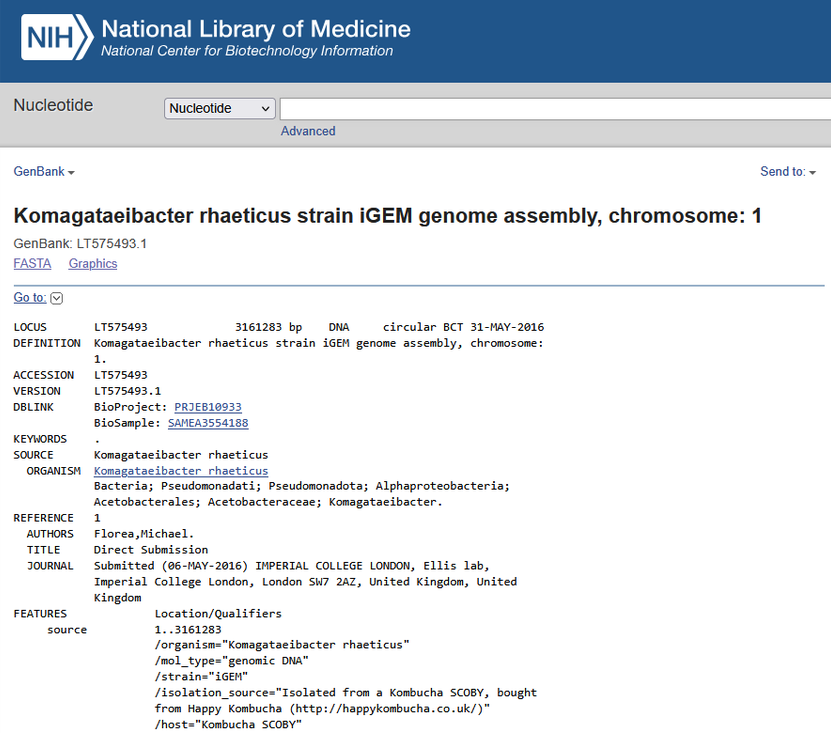
Figure 1. NCBI GenBank record for the Komagataeibacter rhaeticus iGEM genome (LT575493.1), used as the reference genome for the target sequence in this project.
What host or chassis?
The host/chassis is Komagataeibacter rhaeticus, a bacterial cellulose-producing bacterium. This keeps the DNA design connected to the biological system proposed in Homework #1, where bacterial cellulose is the living material used to grow the artifact.
Where does the product need to go?
BcsD needs to function as part of the bacterial cellulose synthase system rather than as an independently secreted protein. Therefore, no additional secretion signal or targeting tag is planned at this stage.
Part 2 — Design the Genetic Parts
For this project, I designed a genetic construct in Kernel to express the candidate BcsD/AcsD protein in Komagataeibacter rhaeticus.
The construct includes the following functional genetic elements:
| Layer | Part | Type | Length | Source | Reason for selection |
|---|---|---|---|---|---|
| Transcription start | PJ23104 | Promoter | 35 bp | Kernel | Provides transcriptional initiation for the BcsD expression cassette. |
| Translation start | BBa_B0034 | Ribosome binding site (RBS) | 12 bp | iGEM Part Registry / Kernel | Provides a bacterial translation-initiation site upstream of the BcsD CDS. |
| Coding sequence | BcsD_KRIGEM_00627 | CDS (+start +stop) | 471 bp | Komagataeibacter rhaeticus candidate sequence / VectorBee / Kernel | Encodes the candidate BcsD/AcsD protein selected as the target of the design. |
| Targeting | None | No additional targeting sequence | — | N/A | No additional signal peptide or targeting tag was added because BcsD is intended to function as part of the bacterial cellulose synthase system. |
| Transcription termination | BBa_B0010 | Terminator | 80 bp | iGEM Part Registry / Kernel | Provides transcriptional termination downstream of the BcsD CDS. |
| Vector context | BBa_K1321300 | Backbone | 2893 bp | pSEVA331Bb / iGEM Registry | Provides a broad-host-range BioBrick vector context; pSEVA331Bb has been used as an E. coli–K. rhaeticus expression vector. |
Construct architecture
The resulting genetic architecture is:
PJ23104 → BBa_B0034 → BcsD_KRIGEM_00627 → BBa_B0010
The expression cassette is contained within the BBa_K1321300 backbone.
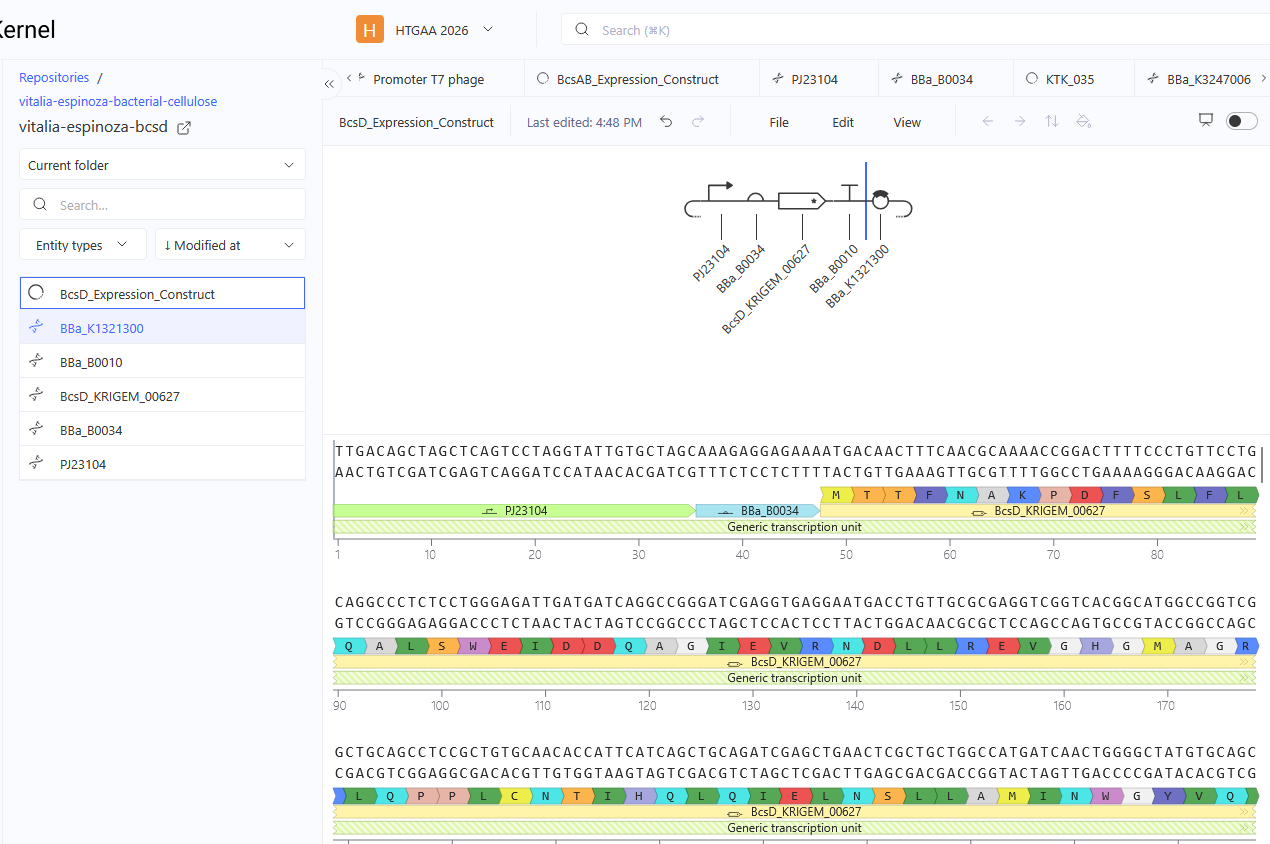
Figure 2. Linear map of the BcsD expression construct assembled in Kernel, showing the promoter, RBS, BcsD coding sequence, and terminator in their 5′→3′ order.
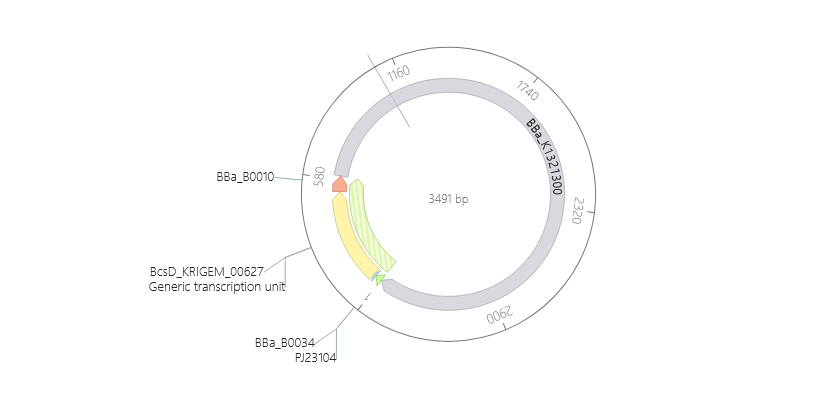
Figure 3. Circular map of the complete construct, showing the BBa_K1321300 backbone and the BcsD expression cassette.
Part 3 — Assemble your construct
I assembled the genetic parts selected in Part 2 in Kernel to create a single expression construct for Komagataeibacter rhaeticus. The purpose of this step was to bring the regulatory elements, BcsD coding sequence, transcriptional terminator, and backbone together into one organized genetic design.
Construct organization
The expression cassette follows the expected 5′→3′ order for a prokaryotic expression system:
PJ23104 → BBa_B0034 → BcsD_KRIGEM_00627 → BBa_B0010
PJ23104 provides the promoter for transcription initiation, followed by BBa_B0034 as the ribosome binding site. The BcsD_KRIGEM_00627 coding sequence is positioned downstream of the RBS and is followed by the BBa_B0010 terminator.
The expression cassette is contained within the BBa_K1321300 backbone, which provides the vector context for the construct.
Construct check
I checked the assembled construct in Kernel to confirm that the selected parts are present in the intended order and orientation. The sequence viewer also shows the boundaries and lengths of the individual parts.
The final construct has a total length of 3,491 bp.
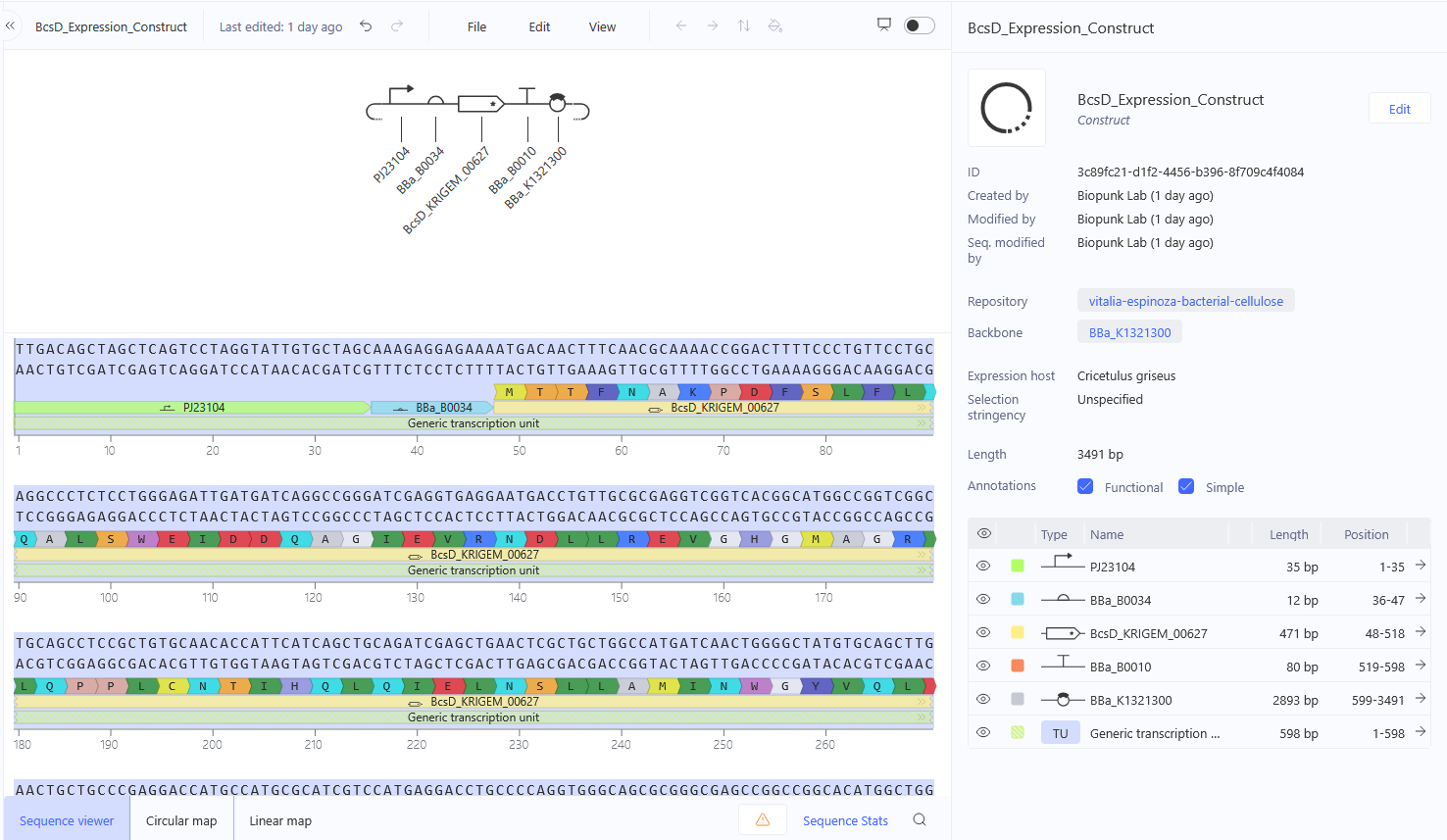
Figure 4. Final BcsD expression construct assembled in Kernel. The sequence viewer shows the PJ23104 promoter, BBa_B0034 ribosome binding site, BcsD_KRIGEM_00627 coding sequence, BBa_B0010 terminator, and BBa_K1321300 backbone, together with their positions and lengths within the 3,491 bp construct.
Final design
The resulting construct provides a complete genetic design for expressing the candidate BcsD/AcsD coding sequence in the selected bacterial host. This assembled construct will serve as the DNA design basis for the next stages of the project.
Part 4 — Optimize and quality-check
The BcsD coding sequence was analyzed using Kernel’s sequence tools to evaluate the design before considering further experimental work. The first analysis was codon optimization, which allowed me to compare the original coding sequence with an optimized version while checking whether the encoded protein remained unchanged.
Codon optimization
I ran the BcsD coding sequence through Kernel’s Codon Optimizer to compare the original sequence with a codon-optimized version.
The original coding sequence is 471 bp long, and the optimized sequence is also 471 bp long. The optimization changed 94 of the 471 nucleotide positions, while preserving the encoded BcsD amino acid sequence, including the terminal stop codon.
Kernel’s Codon Optimizer does not provide Komagataeibacter rhaeticus as an available expression organism. Therefore, I selected Escherichia coli, the available bacterial option, for this comparison. This means that the resulting sequence should not be considered a codon optimization specifically for K. rhaeticus. Instead, the result demonstrates how synonymous codon changes can modify the DNA sequence while preserving the same protein sequence.
Codon usage is relevant because different organisms can have different preferences for synonymous codons, which can influence how efficiently a coding sequence is translated. For this project, the comparison is therefore useful for understanding the effect of codon usage, while the original BcsD sequence remains the reference sequence for the K. rhaeticus design.
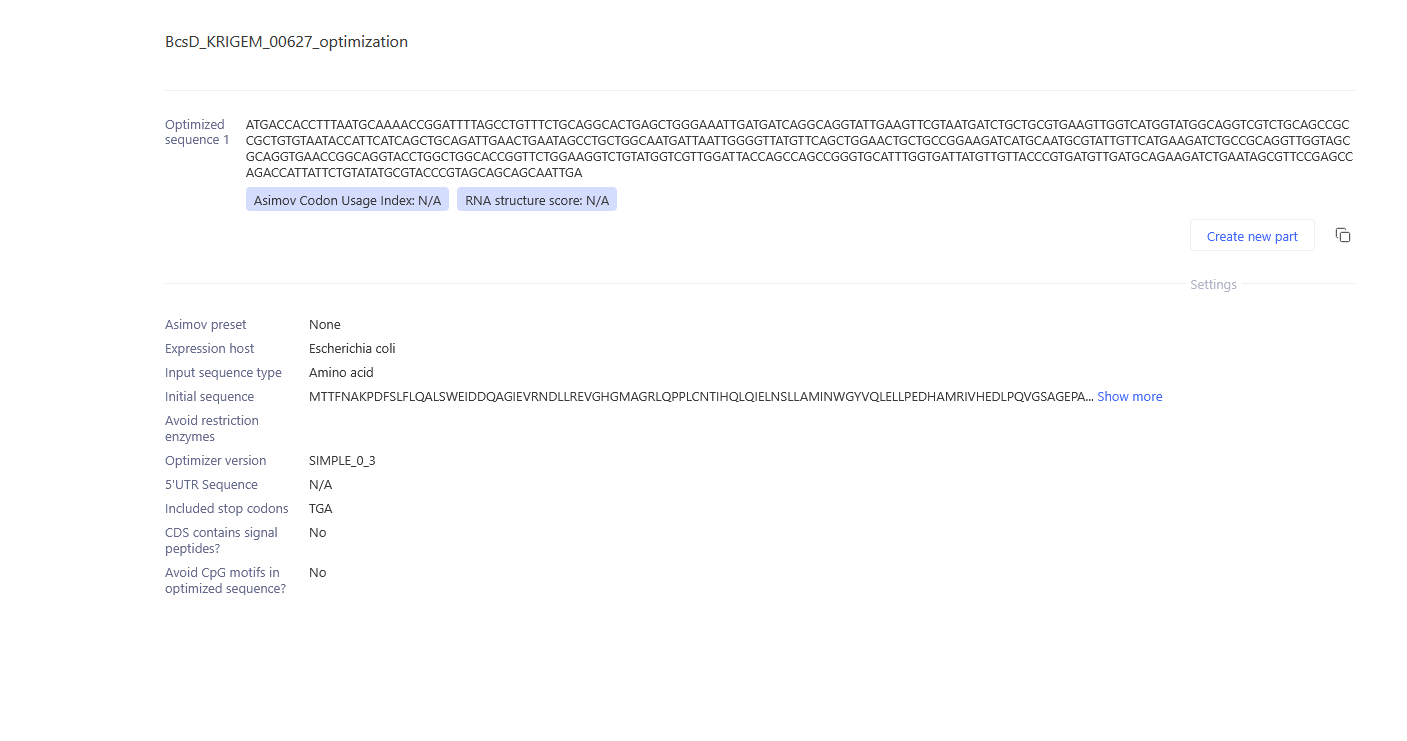
Figure 5. Kernel Codon Optimizer result for the BcsD coding sequence. The tool generated an alternative DNA sequence while preserving the amino acid sequence of the target protein.
Sequence search (BLAST)
I searched the BcsD amino acid sequence using NCBI Protein BLAST (BLASTP) against the ClusteredNR protein database. The query sequence was 156 amino acids long. The closest significant match was identified as cellulose biosynthesis protein BcsD from Komagataeibacter xylinus (NCBI Reference Sequence WP_308720066.1).
The alignment covered the full query sequence (156/156 amino acids) and showed 141 identical amino acids, corresponding to 90.38% sequence identity. The alignment also showed 150/156 positive matches (96%), no gaps, and an E-value of 8e-102. These results indicate a strong sequence similarity between my candidate protein and a naturally occurring BcsD protein.
The NCBI record for WP_308720066.1 identifies the protein as the natural gene bcsD, encoding cellulose biosynthesis protein BcsD. Therefore, the BLAST result supports the identification of BcsD_KRIGEM_00627 as a BcsD homolog. The candidate sequence is not identical to the K. xylinus reference sequence, but its full-length alignment and high sequence identity indicate that it is closely related to a natural BcsD protein rather than a novel unrelated sequence.
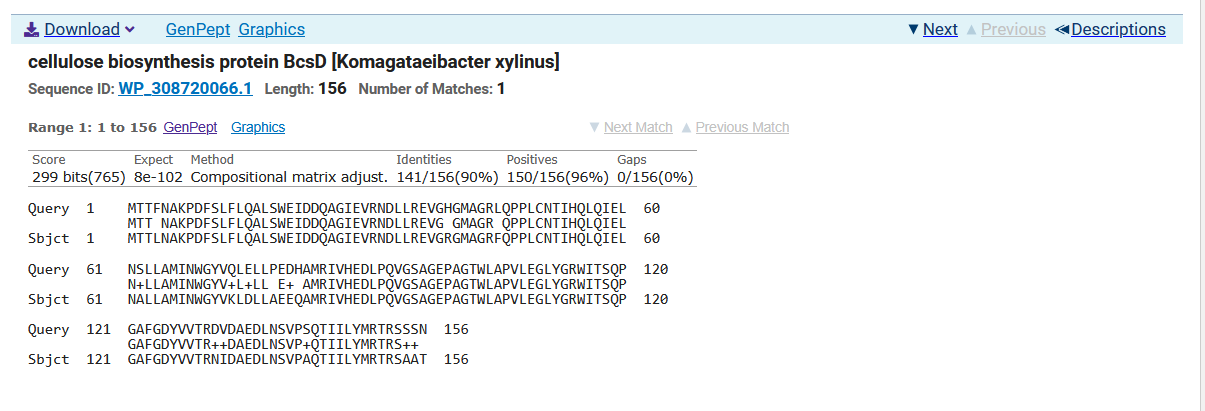
Figure 6. NCBI BLASTP alignment of the candidate BcsD protein with a cellulose biosynthesis protein BcsD from Komagataeibacter xylinus (WP_308720066.1). The alignment shows 100% query coverage, 90.38% sequence identity, 96% positive matches, and no gaps.
Biosecurity screen
I screened the complete BcsD_Expression_Construct sequence using Kernel’s Biosecurity Sequence Scanner, which uses SecureDNA to compare an input nucleotide sequence against a database of potential biosecurity threats. The complete 3,491 bp construct was used for the screening, including the promoter, RBS, BcsD coding sequence, terminator, and backbone.
The scan returned “No flagged sequences detected.” This means that the screening tool did not identify any sequence in the construct that matched a potential biosecurity threat in the database used for the analysis. No sequence was therefore flagged for further review by this screen. This result provides a biosecurity check of the designed construct, while recognizing that it represents the result of this specific screening tool and database rather than a general guarantee of biological safety.
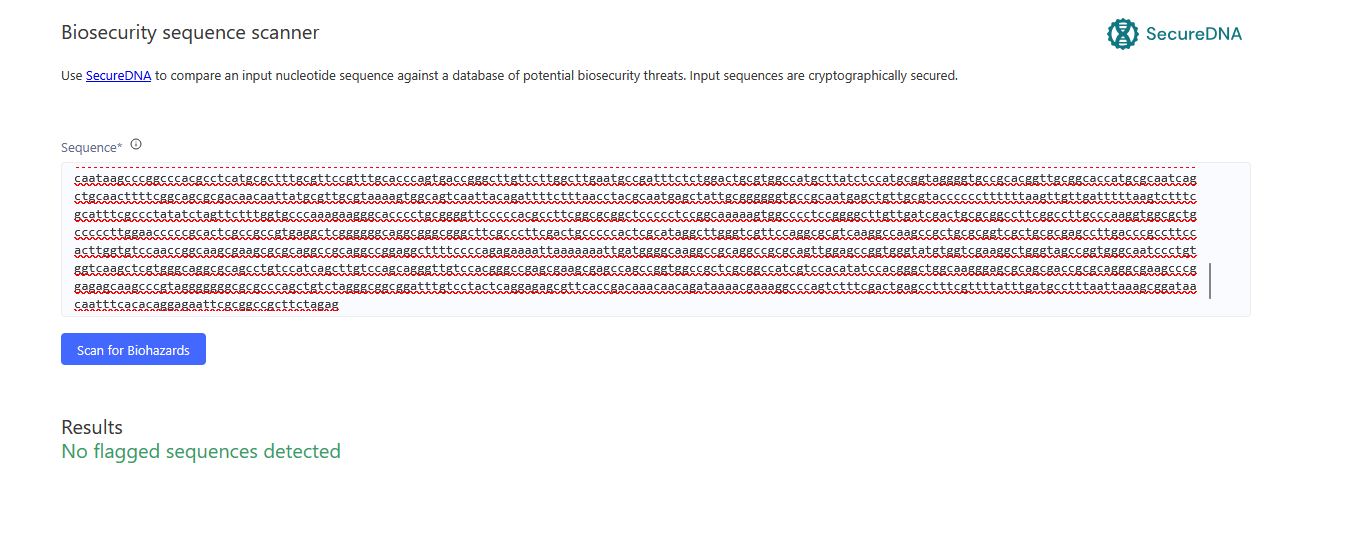
Figure 7. Kernel Biosecurity Sequence Scanner result for the complete BcsD_Expression_Construct. The SecureDNA-based screen returned “No flagged sequences detected.”
Part 5 — From Design to Build
How would you build it?
For the first prototype, I would not start by producing a large library of BcsD variants. I would first build a small number of variants and keep the rest of the construct constant. The main variable would be the BcsD coding sequence, while the promoter, RBS, terminator, and backbone would remain the same.
For these first versions, I would use synthetic DNA or DNA fragments and assemble them with the same backbone. A fragment-based assembly approach such as Gibson assembly could be useful because it allows DNA fragments to be combined into a larger construct. The assigned Gibson et al. reading describes enzymatic assembly of multiple DNA molecules into larger DNA constructs. :contentReference[oaicite:1]{index=1}
My goal would be to test whether different BcsD variants could lead to measurable differences in the physical properties of bacterial cellulose, such as thickness or density. I would also be interested in whether these differences could eventually be used to create regions with different material characteristics within a grown 3D artifact.
What does synthesis constrain?
DNA synthesis is not error-free, so I would not assume that every synthesized sequence is identical to the sequence I designed. This becomes especially important when generating many variants.
Kosuri et al. showed that DNA synthesis from oligonucleotide pools can be affected by synthesis errors and that assembly becomes more difficult as the diversity of the oligonucleotide mixture increases. They also describe challenges associated with sequence characteristics such as high GC content, repetitive sequences, and sequence similarity. :contentReference[oaicite:2]{index=2} :contentReference[oaicite:3]{index=3}
For my construct, I would therefore verify the sequences before using the variants for comparison. If I used an oligo pool to generate many variants, error correction and sequence verification would become particularly important. Kosuri et al. used enzymatic error correction and sequence verification as part of their workflow for improving the quality of assembled genes. :contentReference[oaicite:4]{index=4}
Carr et al. also studied protein-mediated error correction for de novo DNA synthesis, supporting the idea that synthesized DNA can require an error-correction step before being used as a final construct. :contentReference[oaicite:5]{index=5}
At this stage, I do not identify a specific sequence feature in my BcsD design as a known synthesis problem. However, the synthesis process itself is a constraint because errors can be introduced during oligonucleotide synthesis and assembly.
Prototype vs. scale
For the prototype stage, I would work with a small number of BcsD variants. This would allow me to test the main idea without generating a large DNA library. I would keep the overall construct architecture constant and compare the resulting bacterial cellulose to see whether the BcsD variants are associated with differences in properties such as thickness or density.
If the prototype showed an interesting relationship between the BcsD sequence and the physical properties of the cellulose, I would then scale the design to a larger number of variants. At that stage, a DNA pool synthesized on a microchip could become useful because it allows many different oligonucleotide sequences to be generated in parallel. Kosuri et al. demonstrated highly parallel gene synthesis from oligonucleotide pools and showed how this approach can increase the number of sequences that can be explored. :contentReference[oaicite:6]{index=6}
However, scaling would also introduce additional challenges. Kosuri et al. found that increasing sequence diversity can make assembly more difficult and that error correction and sequence verification remain important parts of the process. :contentReference[oaicite:7]{index=7}
Overall, my build strategy would therefore change with scale: a small number of individually designed variants for the first prototype, followed by a more parallel synthesis strategy if the initial results justify exploring a larger number of BcsD variants.
Part 5 — From Design to Build
How would you build it?
For the first prototype, I would not start by producing a large library of BcsD variants. I would first build a small number of variants and keep the rest of the construct constant. The main variable would be the BcsD coding sequence, while the promoter, RBS, terminator, and backbone would remain the same.
For these first versions, I would use synthetic DNA or DNA fragments and assemble them with the same backbone. A fragment-based assembly approach such as Gibson assembly could be useful because it allows DNA fragments to be combined into a larger construct (Gibson et al., 2009).
My goal would be to test whether different BcsD variants could lead to measurable differences in the physical properties of bacterial cellulose, such as thickness or density. I would also be interested in whether these differences could eventually be used to create regions with different material characteristics within a grown 3D artifact.
What does synthesis constrain?
DNA synthesis is not error-free, so I would not assume that every synthesized sequence is identical to the sequence I designed. This becomes especially important when generating many variants.
Kosuri et al. showed that DNA synthesis from oligonucleotide pools can be affected by synthesis errors and that assembly becomes more difficult as the diversity of the oligonucleotide mixture increases. They also describe challenges associated with sequence characteristics such as high GC content, repetitive sequences, and sequence similarity (Kosuri et al., 2010).
For my construct, I would therefore verify the sequences before using the variants for comparison. If I used an oligo pool to generate many variants, error correction and sequence verification would become particularly important. Kosuri et al. used enzymatic error correction and sequence verification as part of their workflow for improving the quality of assembled genes (Kosuri et al., 2010).
Carr et al. also studied protein-mediated error correction for de novo DNA synthesis, supporting the use of error-correction strategies to improve the quality of synthesized DNA (Carr et al., 2004).
At this stage, I do not identify a specific sequence feature in my BcsD design as a known synthesis problem. However, the synthesis process itself is a constraint because errors can be introduced during oligonucleotide synthesis and assembly.
Prototype vs. scale
For the prototype stage, I would work with a small number of BcsD variants. This would allow me to test the main idea without generating a large DNA library. I would keep the overall construct architecture constant and compare the resulting bacterial cellulose to see whether the BcsD variants are associated with differences in properties such as thickness or density.
If the prototype showed an interesting relationship between the BcsD sequence and the physical properties of the cellulose, I would then scale the design to a larger number of variants. At that stage, a DNA pool synthesized on a microchip could become useful because it allows many different oligonucleotide sequences to be generated in parallel. Kosuri et al. demonstrated highly parallel gene synthesis from oligonucleotide pools and showed how this approach can increase the number of sequences that can be explored (Kosuri et al., 2010).
However, scaling would also introduce additional challenges. Kosuri et al. found that increasing sequence diversity can make assembly more difficult and that error correction and sequence verification remain important parts of the process (Kosuri et al., 2010).
Overall, my build strategy would therefore change with scale: a small number of individually designed variants for the first prototype, followed by a more parallel synthesis strategy if the initial results justify exploring a larger number of BcsD variants.
Part 6 — What Don’t You Know Yet?
The main uncertainties in my design are related to expression, the effect of BcsD on the material, and whether the overall genetic design works as expected in Komagataeibacter rhaeticus.
Will BcsD be expressed and produce an observable effect?
One uncertainty is whether the BcsD construct will actually be expressed in Komagataeibacter rhaeticus and whether this expression will have an observable effect on bacterial cellulose.
I would first check whether BcsD is expressed and then compare the resulting cellulose with an appropriate reference condition. This would help determine whether the genetic design is producing an observable biological effect.
Will different BcsD variants affect the physical properties and organization of bacterial cellulose?
Another uncertainty is whether changing the BcsD sequence will actually affect the material. I am interested in whether different variants could produce differences in properties such as thickness or density, as well as differences in how the cellulose is organized.
I would first compare the resulting cellulose samples visually to identify differences in morphology or distribution. I would then use physical measurements, such as thickness or density, together with observations of the cellulose structure, to characterize these differences more systematically.
Will the promoter, RBS, and complete construct work as expected?
A third uncertainty is whether the promoter and RBS selected for the construct will provide an appropriate level of expression, and whether the complete genetic design will function as expected in Komagataeibacter rhaeticus.
I would compare the expression and cellulose production associated with the construct against an appropriate reference condition. If the construct does not behave as expected, I would test design variants, such as changing the promoter or RBS, rather than assuming that the original design is optimal.
These uncertainties define the next stage of the project: moving from a sequence that is computationally designed and checked to a biological prototype that can provide evidence about how BcsD affects bacterial cellulose as a material.
AI
I used ChatGPT as a support tool throughout this project. I used it to help me understand the assignment requirements, organize my ideas, review my genetic construct, and clarify concepts related to DNA design, synthesis, and bacterial cellulose.
I also used ChatGPT to question my assumptions and improve the clarity of my explanations. The final design choices, sequence selection, and project decisions were reviewed and made by me.
AI tool: ChatGPT (OpenAI)
Example prompts used:
“I am designing a BcsD expression construct for Komagataeibacter rhaeticus. Help me identify the main assumptions in my promoter, RBS, CDS, and terminator choices.”
“I want to compare several BcsD variants in the future. How could I approach the first prototype differently from a larger-scale variant library?”
“What are the main limitations of DNA synthesis and oligonucleotide pools that could affect my build strategy?”
“What are the biggest unknowns in my current BcsD design, and how could I test each one experimentally?”
References
Carr, P. A., et al. (2004). Protein-mediated error correction for de novo DNA synthesis. Nucleic Acids Research, 32(20), e162. https://doi.org/10.1093/nar/gnh160
Gibson, D. G., et al. (2009). Enzymatic assembly of DNA molecules up to several hundred kilobases. Nature Methods, 6, 343–345. https://doi.org/10.1038/nmeth.1318
Kondo, T., Nakamura, Y., Nojima, S., Yao, M., & Imai, T. (2022). The BcsD subunit of type I bacterial cellulose synthase interacts dynamically with the BcsAB catalytic core complex. FEBS Letters. https://doi.org/10.1002/1873-3468.14495
Kosuri, S., et al. (2010). Scalable gene synthesis by selective amplification of DNA pools from high-fidelity microchips. Nature Biotechnology, 28, 1295–1299. https://doi.org/10.1038/nbt.1716
Römling, U., & Galperin, M. Y. (2015). Bacterial cellulose biosynthesis: diversity of operons, subunits, products, and functions. Trends in Microbiology, 23(9), 545–557.
NCBI GenBank. Komagataeibacter rhaeticus iGEM genome. Accession LT575493.1.
NCBI Protein BLAST. BcsD sequence comparison against ClusteredNR. Reference sequence WP_308720066.1.
iGEM Registry of Standard Biological Parts. BBa_B0034, BBa_B0010, and BBa_K1321300.
Kernel. HTBAA 2026 DNA design workspace and design tools.
VectorBee. Candidate BcsD/AcsD sequence acsD_KRIGEM_00627.