Week 1 HW: Auto Troph Weave — The Genetic Loom
Auto Troph Weave — The Genetic Loom
Can a weave begin before the fiber exists?
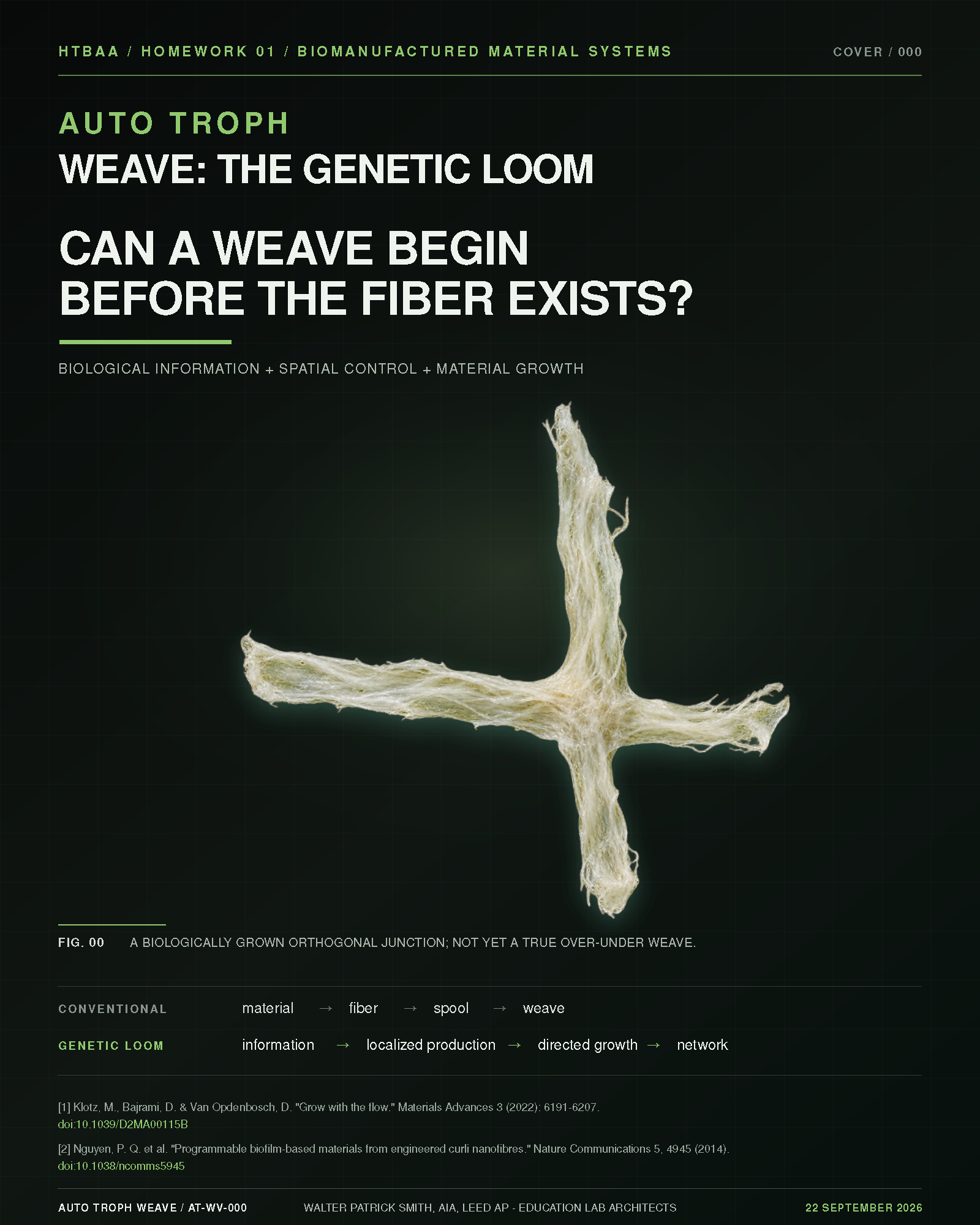
This proposal asks whether a biological system can manufacture a material and organize it into a crossing network during the same growth process. Conventional textile production separates material formation from assembly:
biological material → fiber → spool → weave
The Genetic Loom tests a different sequence:
biological information → localized material production → directed growth → crossing network → continuous textile
The phrase “before the fiber exists” has a precise limit. The system would still produce nanoscale cellulose fibrils; what it could eliminate is the need to first make a finished, transportable yarn and then place that yarn in a conventional loom. The first objective is therefore not a garment, an architectural membrane, or a true over-under weave. It is one integrated biological crossing that can later be repeated into a network.
The project combines two interacting forms of code:
| Code | Mechanism | What it controls |
|---|---|---|
| Genetic code | DNA → mRNA → protein machinery | Material identity, secretion, binding, pigmentation, mineral affinity, and biological behavior |
| Spatial code | Channels, flow, oxygen, geometry, nutrient distribution, and later light | Band direction, density, openings, crossing position, and overall form |
DNA and mRNA do not directly specify the complete macroscopic weave. In the first bacterial-cellulose route, genes encode the cellulose-producing machinery, while the designed growth chamber supplies the larger geometry. This distinction is central to the proposal. Flow-directed bacterial-cellulose networks and programmable microbial nanofibers are established precedents, but the specific two-axis, releasable crossing proposed here remains an experimental target (Klotz, Bajrami, and Van Opdenbosch, 2022; Nguyen et al., 2014).
01 — What Do I Want to Biomanufacture, and Why?
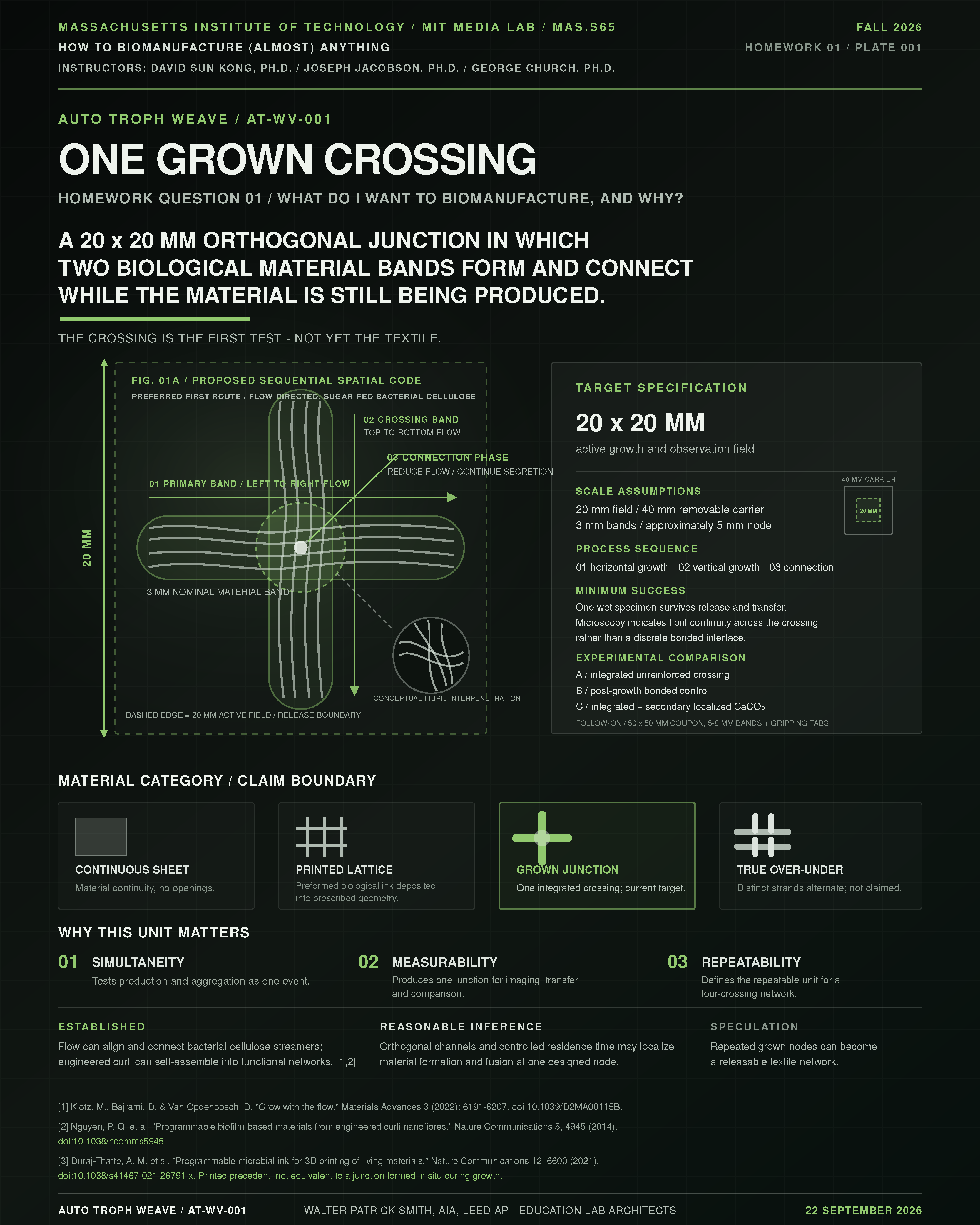
I want to biomanufacture AT-WV-001: One Grown Crossing—a 20 × 20 mm orthogonal junction in which two approximately 3 mm-wide biological material bands form and connect while the material is still being produced. A 40 × 40 mm removable carrier would support growth, observation, release, and testing.
The proposed sequence is:
- Direct a first cellulose band from left to right.
- Direct a second band from top to bottom.
- Reduce flow while maintaining feed and oxygen so newly secreted cellulose can connect the two bands at the node.
- Stop growth, rinse, release, and test the specimen.
This unit matters because it converts a large architectural ambition into a falsifiable material question. The crossing tests whether production and aggregation can occur as one event, provides a node that can be imaged and mechanically compared, and defines the repeatable unit of a four-crossing network. The minimum success is one wet specimen that survives release and shows evidence of fibril continuity across the node rather than two independently formed bands that were merely adhered afterward.
The claim boundary is deliberately narrow. A continuous pellicle has material continuity but no designed openings. A printed lattice deposits a prepared biological ink into a prescribed shape. A grown junction forms and connects in situ. A true weave would require distinct strands to alternate over and under one another; that is not claimed at this stage. The closest material precedent is flow-directed bacterial cellulose, while printed living curli materials demonstrate a related—but different—route to programmed geometry (Klotz et al., 2022; Duraj-Thatte et al., 2021).
02 — What Living System Could Make It?
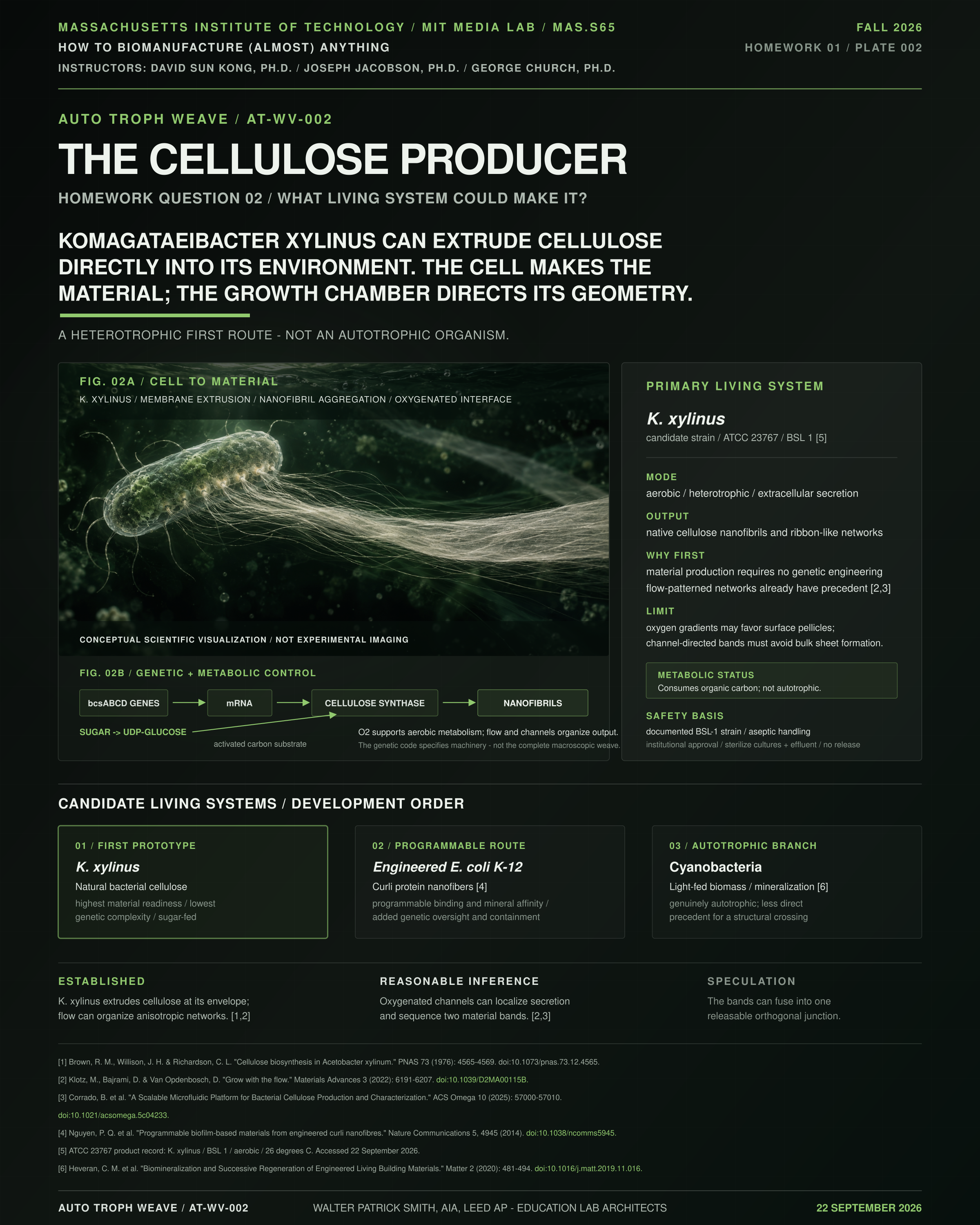
The most achievable first organism is Komagataeibacter xylinus, using a documented biosafety-level-1 strain such as ATCC 23767. The bacterium is aerobic and heterotrophic: it consumes an organic carbon source and extrudes cellulose directly into its environment. This first route is therefore not autotrophic, even though it sits within the broader Auto Troph research program.
At the molecular level, the bcsABCD gene system is transcribed into mRNA and translated into the cellulose-synthase machinery. The protein complex polymerizes glucose-derived precursors and extrudes cellulose chains, which aggregate into nanofibrils and ribbon-like networks. Here, the genetic code specifies the material-production system; it does not encode the macroscopic crossing. The chamber’s channels, flow sequence, nutrient delivery, and oxygen exposure provide that spatial instruction. Classic microscopy established cellulose extrusion at the cell envelope, while current flow and microfluidic studies show that bacterial-cellulose formation can be observed and spatially influenced (Brown, Willison, and Richardson, 1976; Klotz et al., 2022; Corrado et al., 2025).
This is the preferred first route because it offers relatively high material readiness without requiring genetic engineering. A later programmable route could use engineered E. coli K-12 to secrete curli proteins with designed binding or mineral-affinity domains. A separate genuinely autotrophic branch could use cyanobacteria or algae to contribute light-fed biomass, extracellular polymers, functional proteins, or mineralization, but that route has less direct precedent for forming a structural crossing.
The work should use aseptic handling, institutional biosafety guidance, closed cultivation, and sterilization of cultures and effluent before disposal. No organism should be released into the environment. If engineered curli or mineralization strains are introduced later, containment and genetic-construct review become additional requirements.
03 — How Could Automation Assist Production and Experimentation?
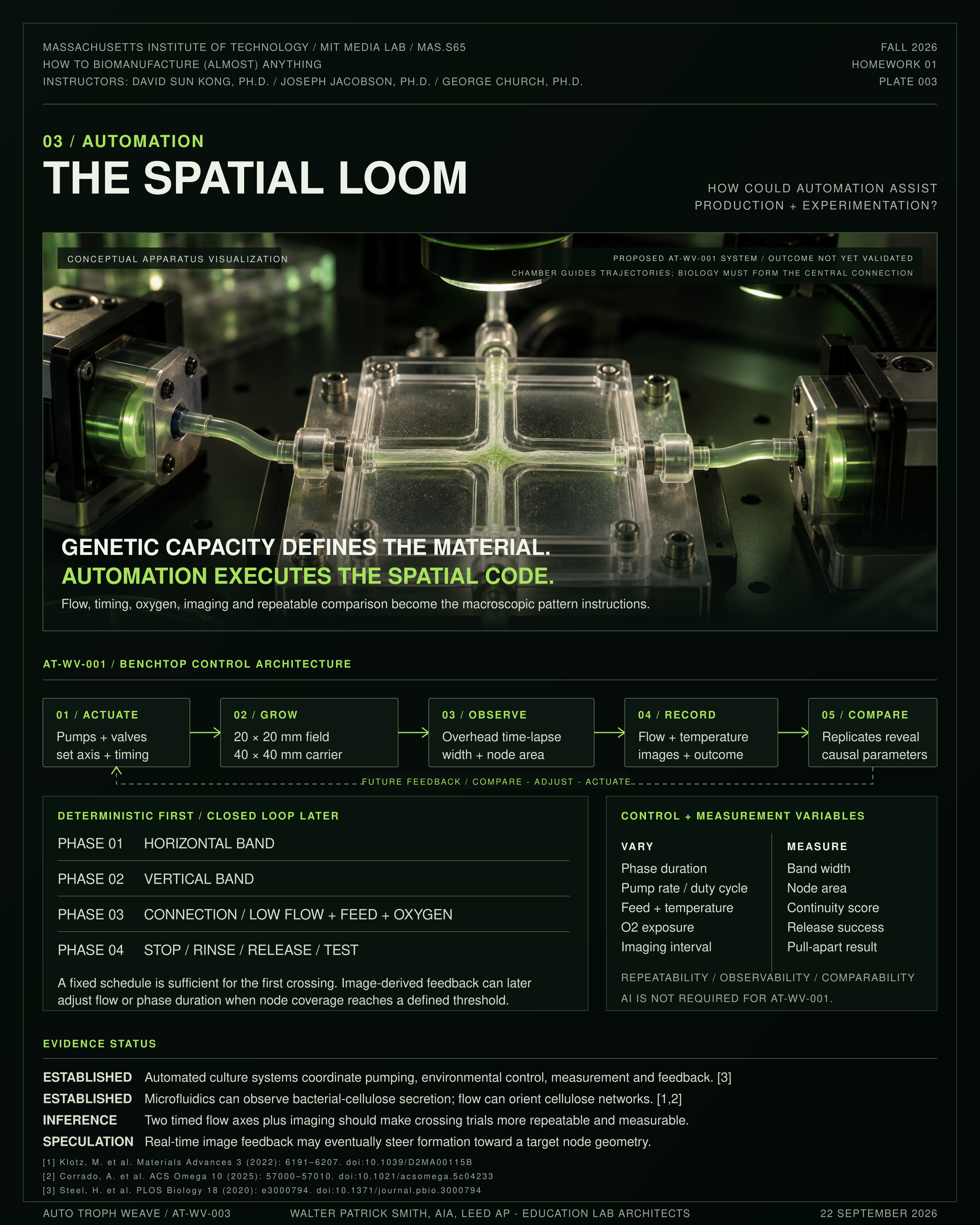
Automation acts as the spatial loom. A small transparent chamber would connect two perpendicular flow axes to computer-controlled pumps and valves. The apparatus would execute four phases: horizontal-band growth, vertical-band growth, a low-flow connection period, and a stop/rinse/release sequence. Temperature and feed conditions would be logged, while overhead time-lapse imaging would measure band width, node area, open area, and release outcome.
For the first prototype, deterministic control is preferable to an autonomous or AI-driven system. A fixed schedule makes trials comparable and helps reveal which variable caused a change. The initial experiment would vary phase duration, pump rate or duty cycle, feed conditions, temperature, and oxygen exposure, while measuring material width, node area, apparent continuity, release success, and pull-apart behavior.
Closed-loop control becomes useful only after a visible feature can be related to material performance. For example, image segmentation could later extend or stop the connection phase when node coverage reaches a defined threshold. Automated bioreactor platforms already combine sensing, pumping, environmental control, and feedback, and microfluidic systems can observe bacterial-cellulose secretion in real time (Steel et al., 2020; Corrado et al., 2025). However, no cited study demonstrates that this control architecture will produce the proposed two-axis crossing; that is the experiment.
04 — How Much Material Is Required, and How Long Might It Take?
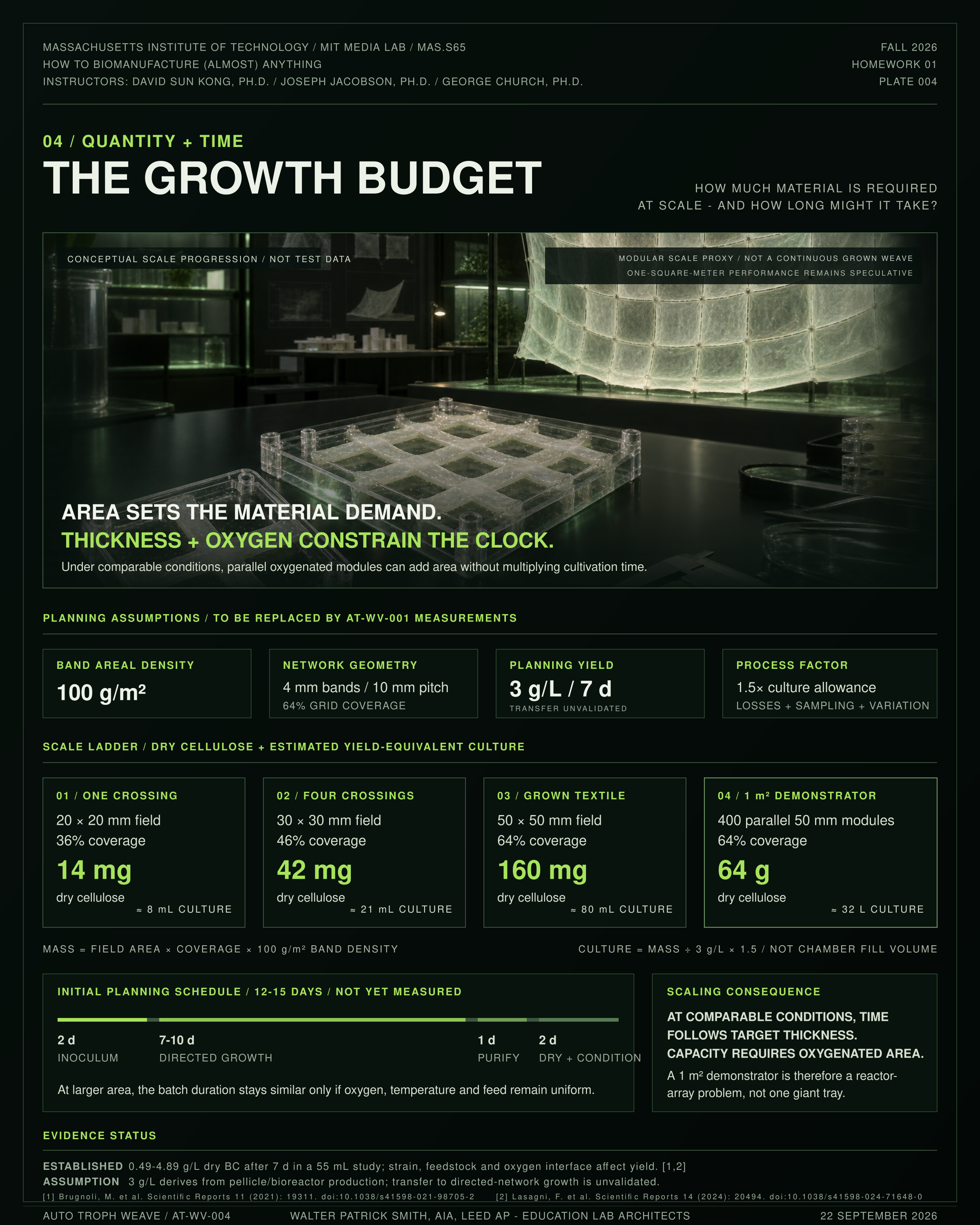
The preliminary budget uses explicit planning assumptions, not measured AT-WV-001 data:
- Dry band areal density: 100 g/m²
- Network geometry: 4 mm bands at 10 mm pitch, or approximately 64% area coverage at network scale
- Planning yield: 3 g dry bacterial cellulose per liter of culture in 7 days
- Process allowance: 1.5× for losses, sampling, and variation
The working equations are:
dry mass = field area × material coverage × dry band areal density
yield-equivalent culture = dry mass ÷ planning yield × process allowance
| Development stage | Field or assembly | Assumed coverage | Estimated dry cellulose | Yield-equivalent culture |
|---|---|---|---|---|
| One crossing | 20 × 20 mm | 36% | 14 mg | approximately 8 mL |
| Four crossings | 30 × 30 mm | 46% | 42 mg | approximately 21 mL |
| Small grown textile | 50 × 50 mm | 64% | 160 mg | approximately 80 mL |
| 1 m² demonstrator proxy | 400 parallel 50 mm modules | 64% | 64 g | approximately 32 L |
“Yield-equivalent culture” is not the chamber fill volume. It is the culture volume implied by the assumed mass yield, including the 1.5× allowance. Published yields vary substantially with strain, carbon source, oxygen access, and reactor geometry; the 3 g/L figure is therefore a planning value whose transfer to a directed network has not been validated (Brugnoli et al., 2021; Lasagni et al., 2024).
An initial batch is estimated at 12–15 days: approximately 2 days for inoculum preparation, 7–10 days for directed growth, 1 day for purification, and 2 days for drying and conditioning. At larger area, production time remains similar only if oxygen, temperature, and feed remain comparable across parallel modules. A one-square-meter demonstrator is therefore treated as a speculative reactor-array problem, not as one continuous grown textile.
05 — What Are the Most Important Technical Unknowns?
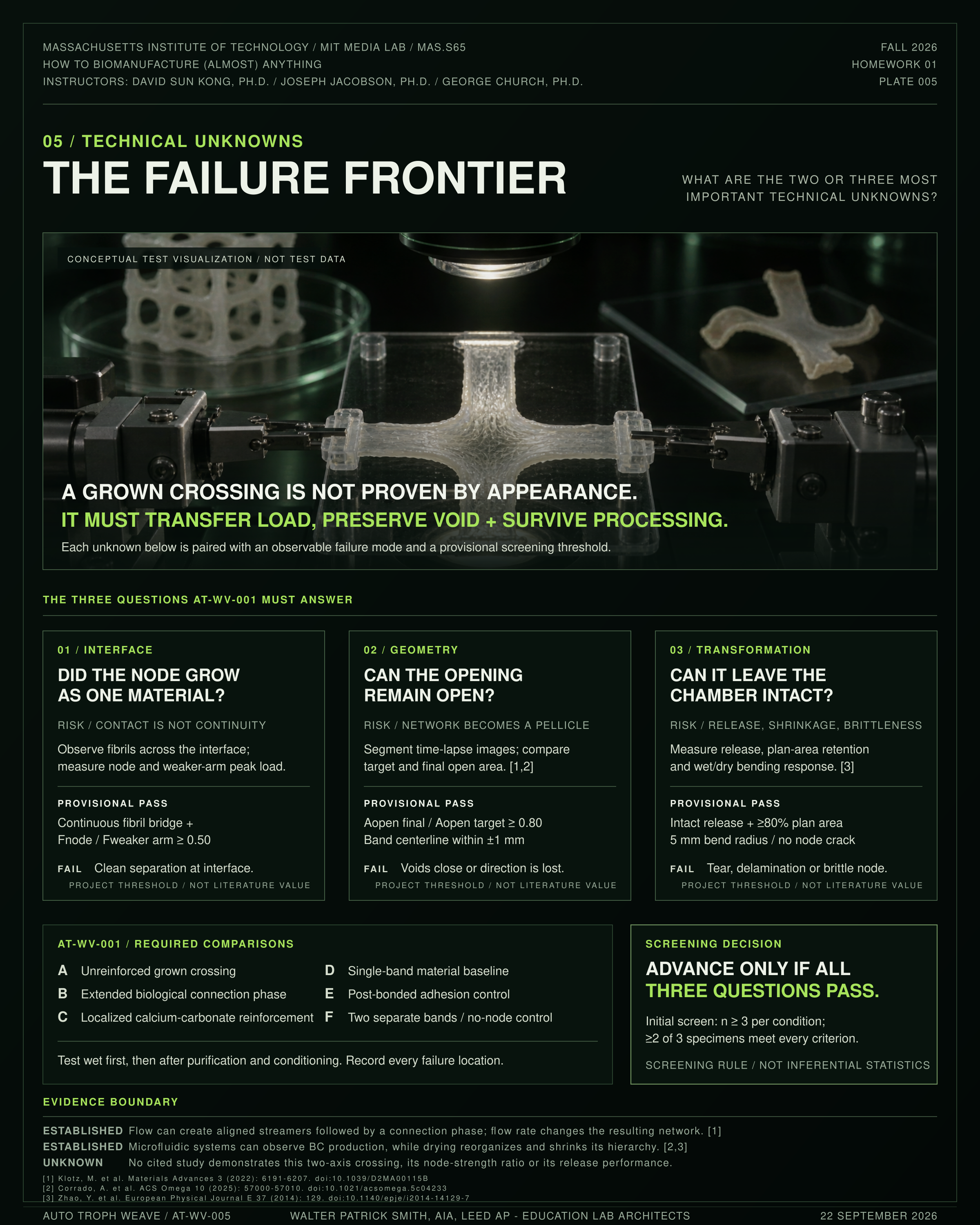
The first experiment must answer three linked questions. A crossing is not successful because it looks continuous; it must preserve its opening, transfer load through the node, and survive removal from the apparatus.
| Unknown | Principal risk | Measurement | Provisional screening threshold |
|---|---|---|---|
| Interface — Did the node grow as one material? | Contact is mistaken for continuity | Microscopy across the interface; compare node peak load with the weaker arm | Continuous fibril bridge and Fnode / Fweaker arm ≥ 0.50 |
| Geometry — Can the opening remain open? | The network becomes a pellicle | Segment time-lapse images; compare final and target open area | Aopen final / Aopen target ≥ 0.80; band centerline within ±1 mm |
| Transformation — Can it leave the chamber intact? | Release, drying shrinkage, or brittleness destroys the node | Record release, plan-area retention, and wet/dry bending | Intact release, ≥80% plan area retained, and 5 mm bend radius without node cracking |
These values are project thresholds, not literature values. They create a clear first screening rule and should be revised after observing the first specimens. The initial comparison set is: an unreinforced grown crossing; a longer biological connection phase; a crossing with localized calcium-carbonate reinforcement; a single-band material baseline; a post-bonded adhesion control; and two separate bands with no node. A minimum of three specimens per condition is adequate for screening repeatability, but not for inferential statistics.
Mineralization should be tested only after the unreinforced interface is understood. Otherwise, calcium carbonate could mask a weak biological connection. Drying is also a material transformation rather than a neutral finishing step because it can reorganize and shrink the cellulose hierarchy (Zhao et al., 2014).
06 — Development Path and Architectural Relevance
The proposed hierarchy is:
molecular instruction → material secretion → one crossing → four-crossing network → 50 × 50 mm grown textile → body-scale demonstrator → architectural membrane
Only the first crossing is presently specified as an experiment. An architectural membrane would require many further demonstrations: uniform oxygenation and feed, repeatable openings, node-to-arm load transfer, controlled thickness, dimensional stability through purification and drying, durability, fire performance, weathering behavior, attachment details, repair, and end-of-life handling.
This makes Genetic Loom a stronger Homework #1 proposal than NacreScale because it begins with a smaller, more falsifiable unit and directly connects a living producer, an automated apparatus, measurable outcomes, and a scale calculation. NacreScale remains a related but separate Auto Troph branch: it asks biology to manufacture discrete mineral–organic components that are aggregated afterward. Genetic Loom asks biology to manufacture the material and its network organization together. Nacre-like mineralization may later reinforce crossings, edges, or high-stress regions without becoming the primary woven substance.
07 — Methods, Sources, and AI Disclosure
Method
This submission is a research proposal based on primary-literature review, comparative biological-route assessment, apparatus design, and back-of-the-envelope material calculations. No AT-WV-001 specimen has yet been grown or tested. All apparatus and specimen images are conceptual visualizations rather than experimental photographs or measured data. Statements on the plates are labeled as established research, reasonable inference, planning assumption, or speculation.
Selected primary sources
- Brown, R. M., Willison, J. H. M., and Richardson, C. L. “Cellulose biosynthesis in Acetobacter xylinum: Visualization of the site of synthesis and direct measurement of the in vivo process.” Proceedings of the National Academy of Sciences 73 (1976): 4565–4569. doi:10.1073/pnas.73.12.4565
- Klotz, M., Bajrami, D., and Van Opdenbosch, D. “Grow with the flow—observing the formation of rheotactically patterned bacterial cellulose networks.” Materials Advances 3 (2022): 6191–6207. doi:10.1039/D2MA00115B
- Corrado, B. et al. “A Scalable Microfluidic Platform for Bacterial Cellulose Production and Characterization.” ACS Omega 10 (2025): 57000–57010. doi:10.1021/acsomega.5c04233
- Nguyen, P. Q. et al. “Programmable biofilm-based materials from engineered curli nanofibres.” Nature Communications 5 (2014): 4945. doi:10.1038/ncomms5945
- Duraj-Thatte, A. M. et al. “Programmable microbial ink for 3D printing of living materials.” Nature Communications 12 (2021): 6600. doi:10.1038/s41467-021-26791-x
- Steel, H. et al. “In situ characterisation and manipulation of biological systems with Chi.Bio.” PLOS Biology 18 (2020): e3000794. doi:10.1371/journal.pbio.3000794
- Brugnoli, M. et al. “Assessing effectiveness of Komagataeibacter strains for producing surface microstructured cellulose via guided assembly.” Scientific Reports 11 (2021): 19311. doi:10.1038/s41598-021-98705-2
- Lasagni, F. et al. “How carbon sources drive cellulose synthesis in two Komagataeibacter xylinus strains.” Scientific Reports 14 (2024): 20494. doi:10.1038/s41598-024-71648-0
- Zhao, Y. et al. “Hierarchical structure in microbial cellulose: what happens during the drying process.” The European Physical Journal E 37 (2014): 129. doi:10.1140/epje/i2014-14129-7
- Heveran, C. M. et al. “Biomineralization and successive regeneration of engineered living building materials.” Matter 2 (2020): 481–494. doi:10.1016/j.matt.2019.11.016
AI disclosure
I used OpenAI ChatGPT/Codex to support literature organization, scientific critique, back-of-the-envelope calculations, writing, and the graphic development of the folio. Generative image tools were used to produce conceptual hero images; these are labeled as visualizations and are not presented as experimental evidence. The project framing, selection of claims, design decisions, and responsibility for checking the cited sources remain with the author.
AUTO TROPH
EDUCATION LAB ARCHITECTS
WALTER PATRICK SMITH, AIA, LEED AP