Week 9 HW: Genetic Circuit Design
Q1: Design a neuromorphic genetic circuit that successfully classifies uveal melanoma from healthy cells.
Input: expression levels of TNSF10 (X1) and TRPM1 (X2) as the two inputs. Based on Figure 1, the cancer-classified region is generally associated with lower TNSF10 expression and higher TRPM1 expression. Therefore, the two inputs should have opposite effects on the output.
Neuromorphic genetic circuit
I chose CasE and PgU as the two ERNs because they recognize different RNA target sites, allowing them to perform different regulatory functions. The provided genetic parts list also includes PgU_rec_CasE, which supports the use of repression and double repression. My choice is based on the desired circuit logic rather than assuming that these two ERNs perform better than Csy4. The intended behavior is that increasing TNSF10 decreases the output, while increasing TRPM1 increases the output.
Output
I chose human Bax (hBax), a pro-apoptotic protein, as the proposed therapeutic output because it promotes programmed cell death. This choice is inspired by Xie et al. (2011), who previously used hBax as an output in a cancer cell classifier.
Limitation
Further development of the input-sensing mechanisms and validation of the circuit would be necessary to determine whether it can accurately distinguish cancer cells from healthy cells.
Reference: Xie et al. (2011). Multi-input RNAi-based logic circuit for identification of specific cancer cells. Science, 333, 1307–1311. https://doi.org/10.1126/science.1205527
Q2: Pick a disease that you think could be treated or cured with a cell therapy.
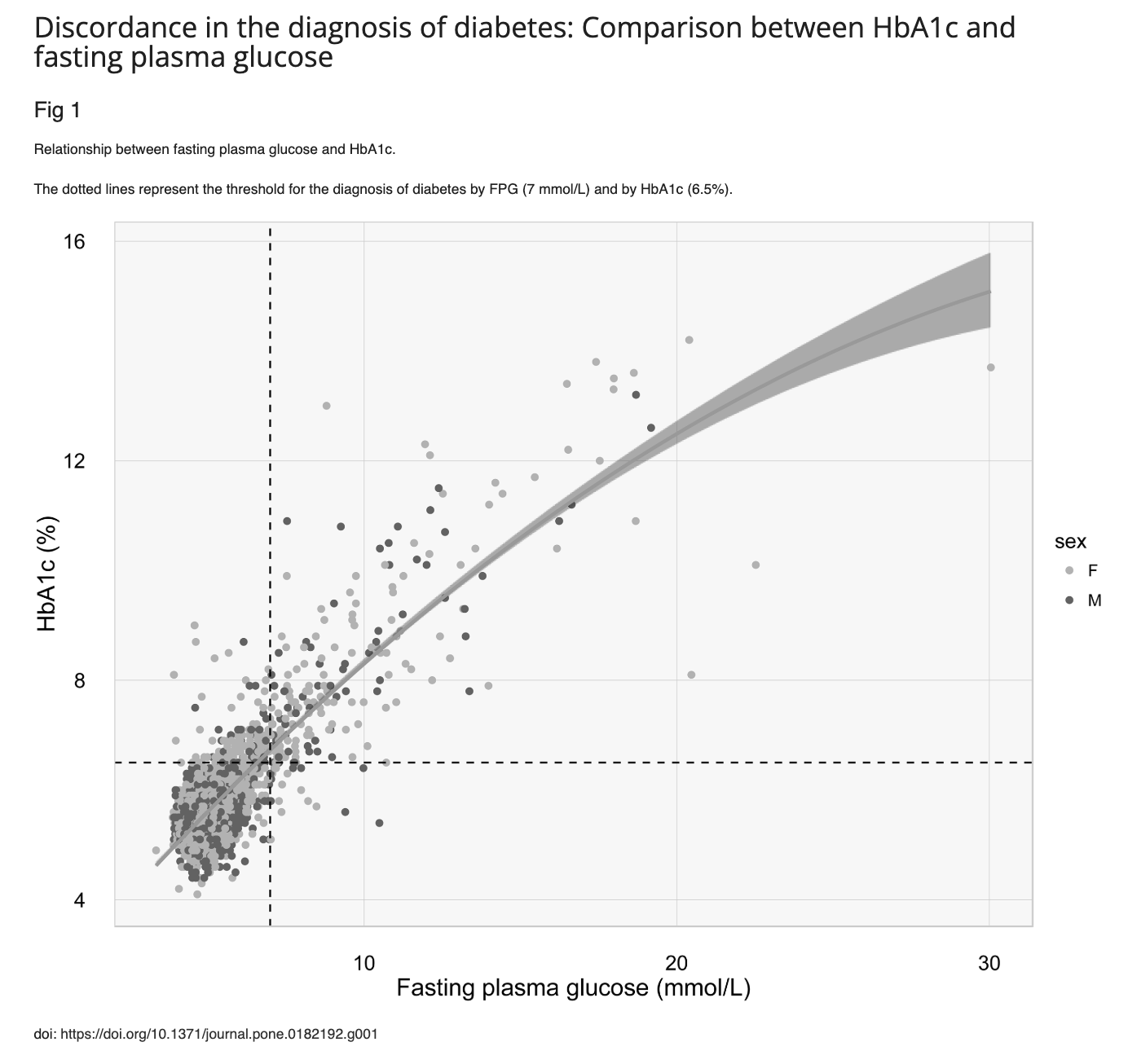
Disease:Type 2 diabetes.
reason: it has measurable biological markers and could potentially benefit from engineered cells that regulate blood glucose levels.
Inputs
biological makers: fasting plasma glucose (X1) and HbA1c (X2). The diagnostic thresholds for diabetes are 126 mg/dL for fasting plasma glucose and 6.5% for HbA1c. Glucose reflects the current blood sugar level, while HbA1c reflects longer-term blood sugar levels.
Classification: Based on Ho-Pham et al. (2017), both biomarkers can be used to identify a diabetic state. Unlike Question 1, increasing either input provides evidence of disease, so both inputs should contribute positively to the disease classification.
Neuromorphic genetic circuitry: a conceptual system integrates both inputs into a disease classification signal. ERN-mediated RNA regulation could be explored to control the output according to the strength of the input signals.
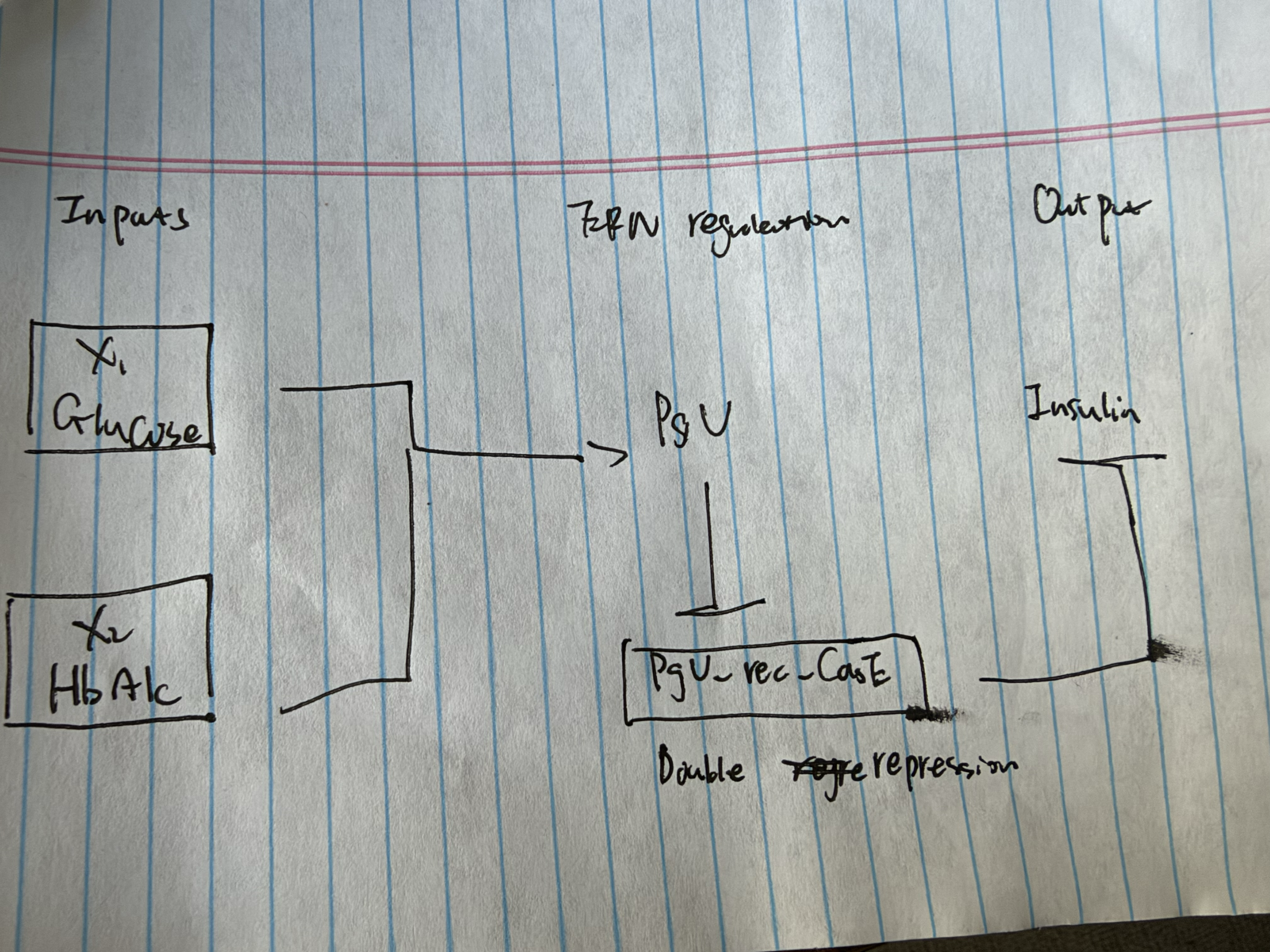 (why double repression: both inputs should contribute positively to the output. However, ERNs mainly function through RNA cleavage and repression. Therefore, I considered double repression as a way to achieve an overall positive regulatory effect.)
Output: Insulin is proposed as the therapeutic output because it helps reduce blood glucose levels. Engineered insulin-producing cells could potentially help regulate glucose levels in patients with diabetes.
Limitation: HbA1c is a long-term biomarker measured in red blood cells and cannot be assumed to be directly sensed by engineered therapeutic cells. A separate sensing mechanism would be necessary. The therapeutic output would also need to respond to current glucose levels to avoid excessive insulin release. The specific ERN circuit remains to be designed and validated.
updated after dry lab:I designed a circuit in which both X1 and X2 contribute positively to the expression of the output. I used CasE as a baseline repressor and CasE_rec_mNeonGreen as the regulated output element. The input markers are mKO2 and mMaroon1, respectively. The Wizard prediction shows that increasing either input increases the output, with the highest predicted output occurring when both inputs are high. This is consistent with the intended positive contributions of both diabetes biomarkers.
Output: In the simulation, mNeonGreen is used as a fluorescent reporter. For the proposed therapeutic application, insulin would be the intended output. Further research would be required to develop appropriate biomarker-sensing mechanisms and ensure safe glucose-dependent insulin secretion.
reference Ho-Pham, L. T., et al. (2017). Discordance in the diagnosis of diabetes: Comparison between HbA1c and fasting plasma glucose. PLOS ONE. https://doi.org/10.1371/journal.pone.0182192 NIDDK. Diabetes Tests & Diagnosis. https://www.niddk.nih.gov/health-information/diabetes/overview/tests-diagnosis Xie et al. (2016). β-cell-mimetic designer cells provide closed-loop glycemic control. https://pubmed.ncbi.nlm.nih.gov/27940875/
Q3
Application
I would like to explore how neuromorphic genetic circuits could regulate the microbial production of medium-chain-length polyhydroxyalkanoates (mcl-PHAs), a potential bio-based material for developing alternatives to conventional spandex.
Inputs I chose carbon availability (X1) and nitrogen availability (X2) as the two environmental inputs. Carbon provides the resources for polymer production, while nitrogen availability influences microbial growth and PHA accumulation.
Neuromorphic genetic circuit
ERN-based regulation to integrate carbon and nitrogen signals. The intended behavior is to promote PHA accumulation when carbon is abundant and nitrogen is limited, rather than continuously producing the material regardless of environmental conditions. 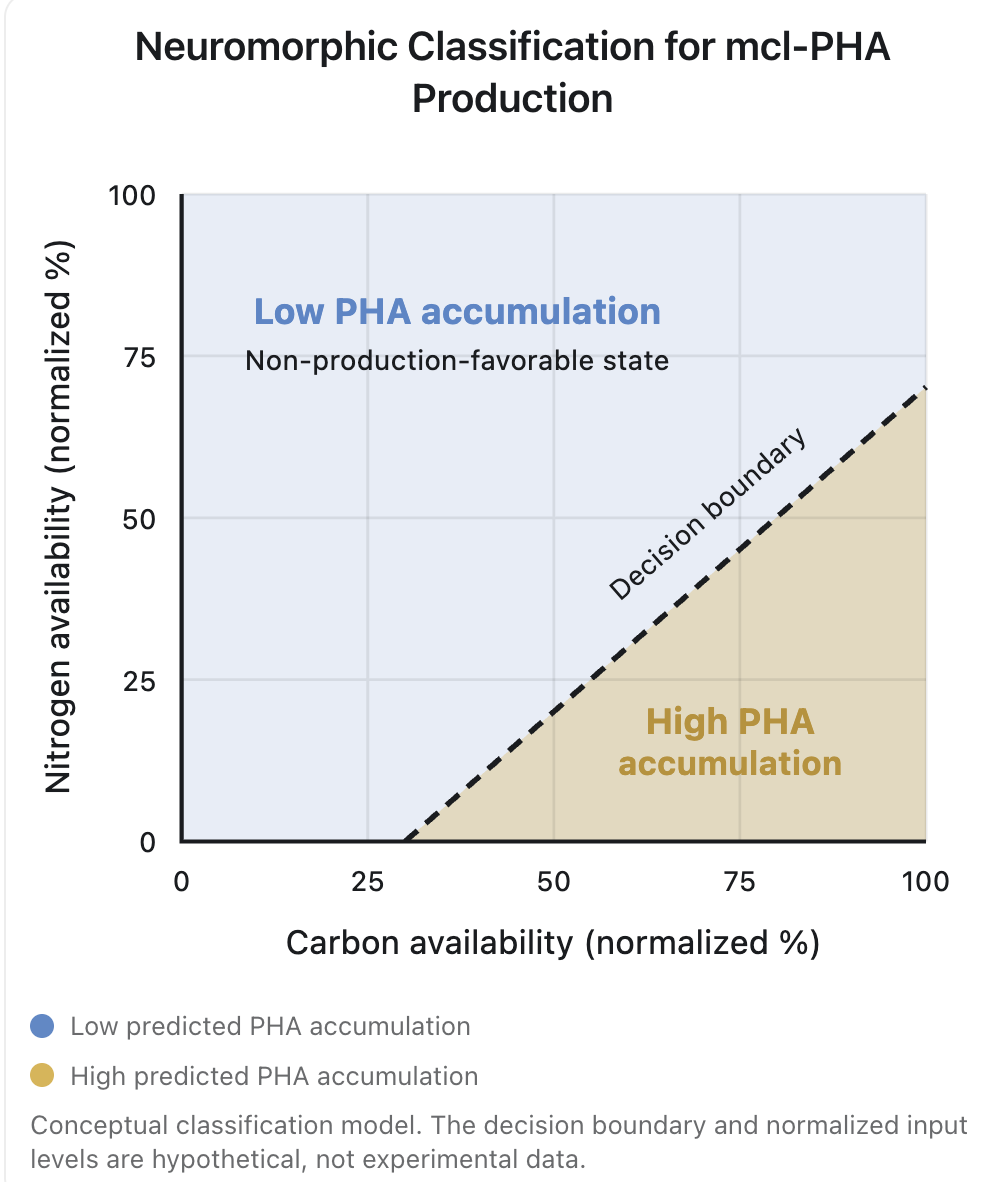
Output Increased intracellular accumulation of mcl-PHA through regulated expression of PHA biosynthesis enzymes.
I used gpt 6.2 to assist my work.