Week 1 HW: Final Project Ideas
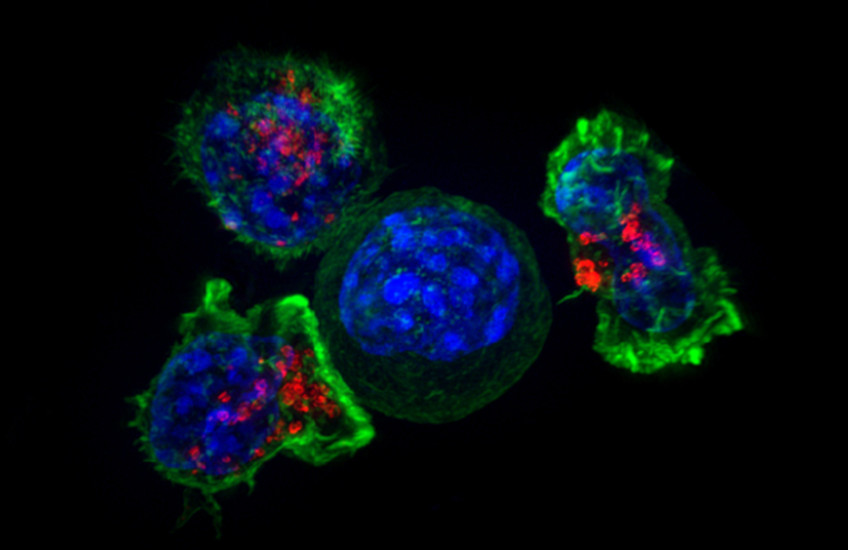 Killer T cells surrounding a cancer cell.
Image source: Harvard Medical School
A Programmable SynNotch CAR-T Platform for Neuroblastoma
1.🪄 What I would like to biomanufacture, and Why ?
Neuroblastoma is a cancer of the developing nervous system that primarily affects children. Although treatment outcomes have improved, patients with high-risk, relapsed, or refractory disease continue to have limited effective therapeutic options.
CAR-T-cell therapy has shown encouraging activity in neuroblastoma, but its effectiveness is limited immune escape, limited or variable T-cell persistence, functional exhaustion within the tumor microenvironment, and the potential for on-target, off-tumor toxicity.
To address some of these limitations and to improve the specificity and functionality of CAR-T-cell therapy, I propose to biomanufacture a programmable, dual-antigen, logic-gated theranostic CAR-T-cell system that restricts full therapeutic activation to the tumor environment.
The engineered T cells would use a synthetic IF–THEN recognition circuit to increase tumor specificity while reducing constitutive CAR signaling providing autonomous control over T-cell activity.
- The core of my proposed system would therefore use dual-antigen recognition rather than constitutive recognition of a single tumor antigen.
The engineered T cell would first recognize the neuroblastoma-associated antigen GD2 through a synthetic Notch (SynNotch) receptor.
GD2 recognition would act as a priming signal, releasing a synthetic transcription factor that induces expression of a CAR directed against a second neuroblastoma antigen, GPC2.
The resulting logic is:
followed by:
IF GPC2 is encountered → THEN activate the T cell and kill the target cell
Thus, the overall functional sequence would be:
GD2 sensing → SynNotch activation → GPC2-CAR deployment → GPC2 recognition → antitumor response
Additionally, an inducible fluorescent reporter (such as GFP) generate a detectable signal upon GD2-SynNotch binding and an activation-dependent, membrane-tethered IL-15 module is added to enhance T-cell survival and persistence after GPC2 recognition allowing the engineered T cells to function as both therapeutic effectors and living biosensors.
The concept is therefore not simply to manufacture a CAR-T cell, but to manufacture a living therapeutic system capable of sensing its environment, making a decision, and executing an antitumor response.
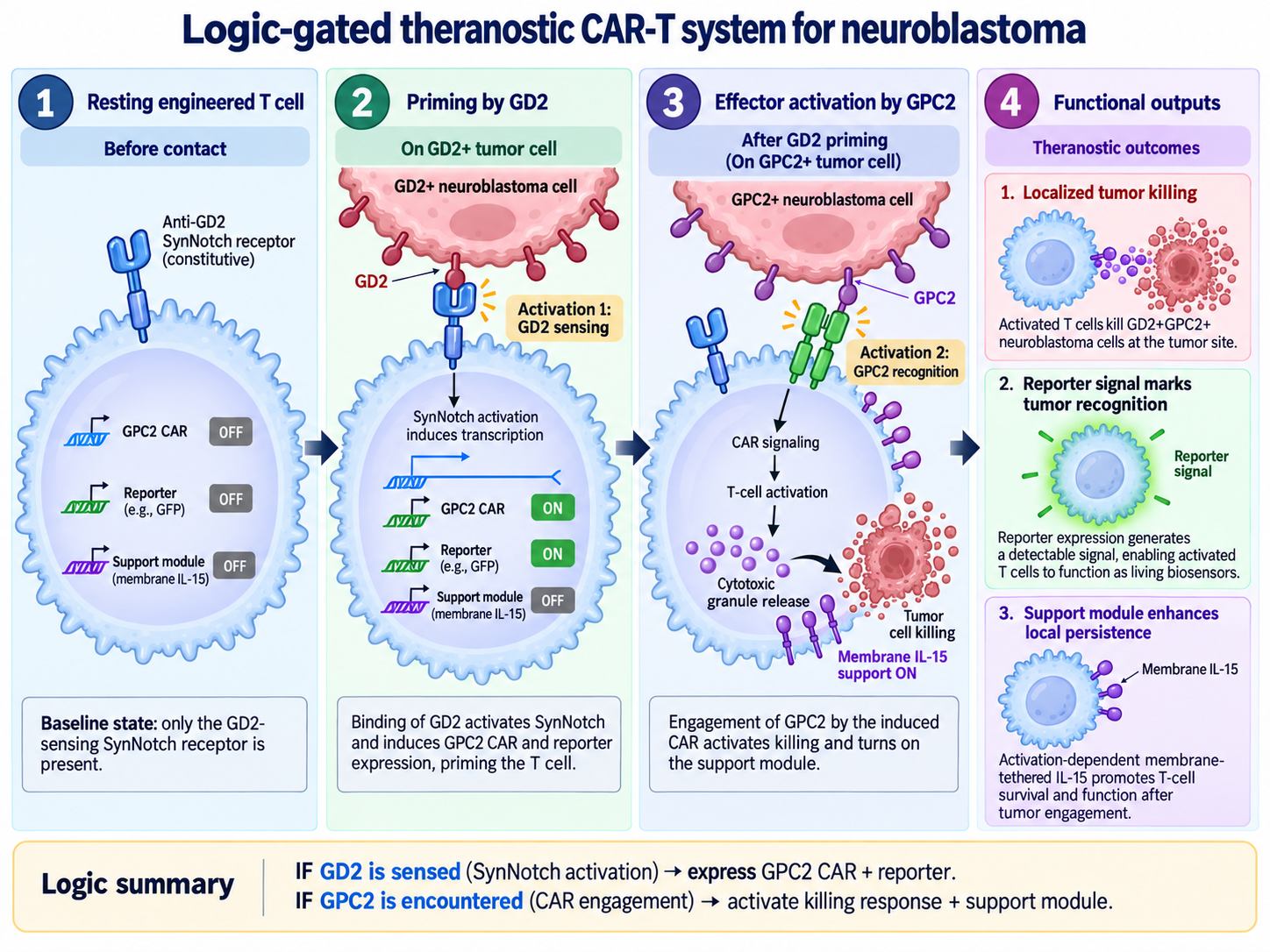 Mechanism of the GD2-SynNotch–GPC2 CAR-T Logic-Gated System (AI generated)
2.🦠 What living system would I use?
The manufacturing chassis would be primary human T lymphocytes obtained from the patient, producing an autologous engineered T-cell product.
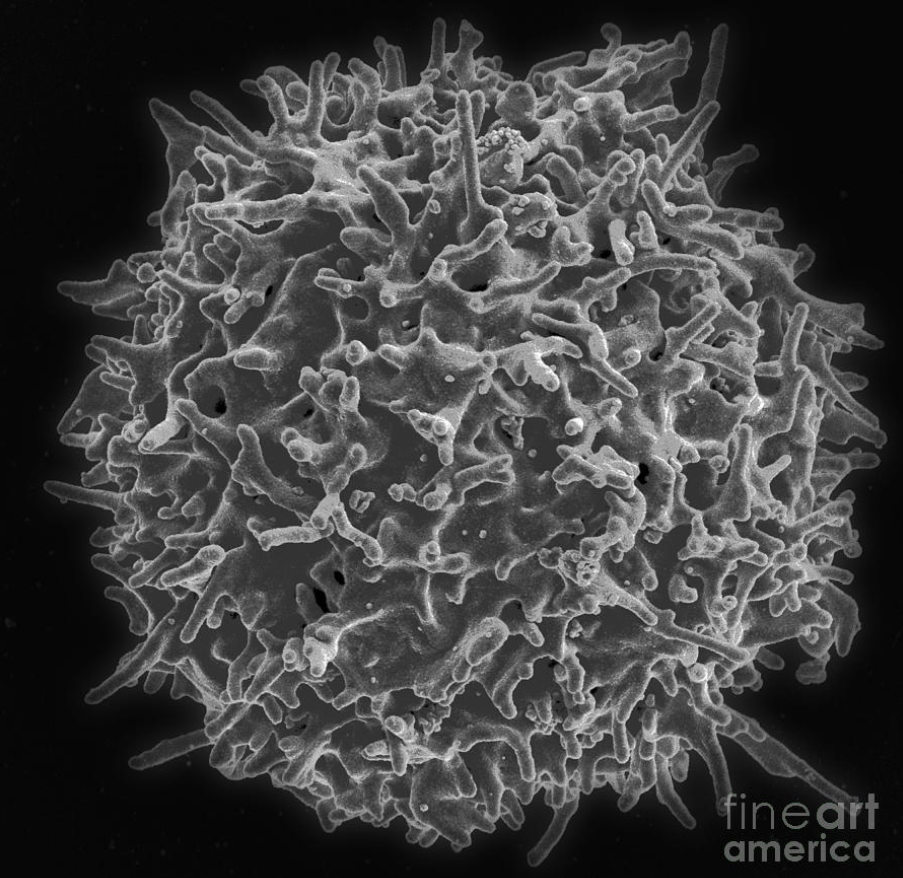 Human T Lymphocytes in SEM
Image source:
Human T Lymphocytes in SEM
Image source:
- At a conceptual level, the cells would be engineered to contain four functional modules:
GD2-sensing module: A GD2-specific SynNotch receptor constitutively present on the engineered T cell.
GPC2 effector module: Recognition of GD2 releases the SynNotch transcription factor, which activates transcription of a GPC2-specific CAR.
Reporter module: An inducible reporter module
Activation-support module: After CAR engagement, an inducible membrane-tethered cytokine signal, such as IL-15, would provide localized support to the activated T cell.
The inputs to the living system are therefore tumor-associated molecular signals, primarily GD2 and GPC2. The biological processes performed by the engineered T cell include antigen sensing, synthetic transcriptional regulation, CAR expression, signal transduction, cytotoxicity, cytokine-mediated support.
The final output is a population of engineered autologous T cells capable of conditional tumor recognition and regulated antitumor activity.
3.⚙️ How would I use automation?
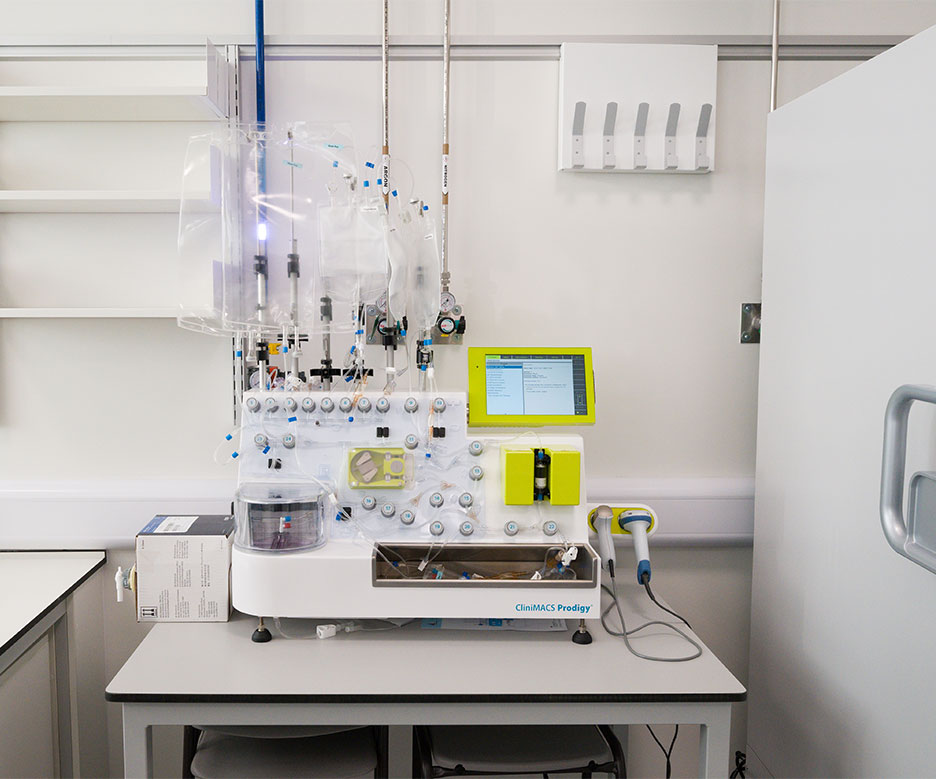
I would integrate the engineered T-cell system with a closed, automated cell-processing platform such as the CliniMACS Prodigy. CAR-T-cell manufacturing involves multiple interconnected operations including T-cell enrichment, activation, genetic modification, expansion, sampling, washing, harvesting and final formulation. Performing these operations manually increases operator workload and introduces opportunities for variability and contamination.
🩸 T-cell enrichment and preparation from the patient's starting material;
🧬 standardized cell activation and genetic modification;
🧫 controlled expansion and culture;
🤖 automated feeding and process monitoring;
🔬 in-process sampling;
🧪 final washing, harvesting and formulation.
Automation would also improve reproducibility and enable multiple patient-specific manufacturing batches to be processed in parallel.
During early-stage development, an Opentrons Flex platform could be used to automate high-throughput liquid handling, construct screening, and characterization of the engineered T-cell circuit.
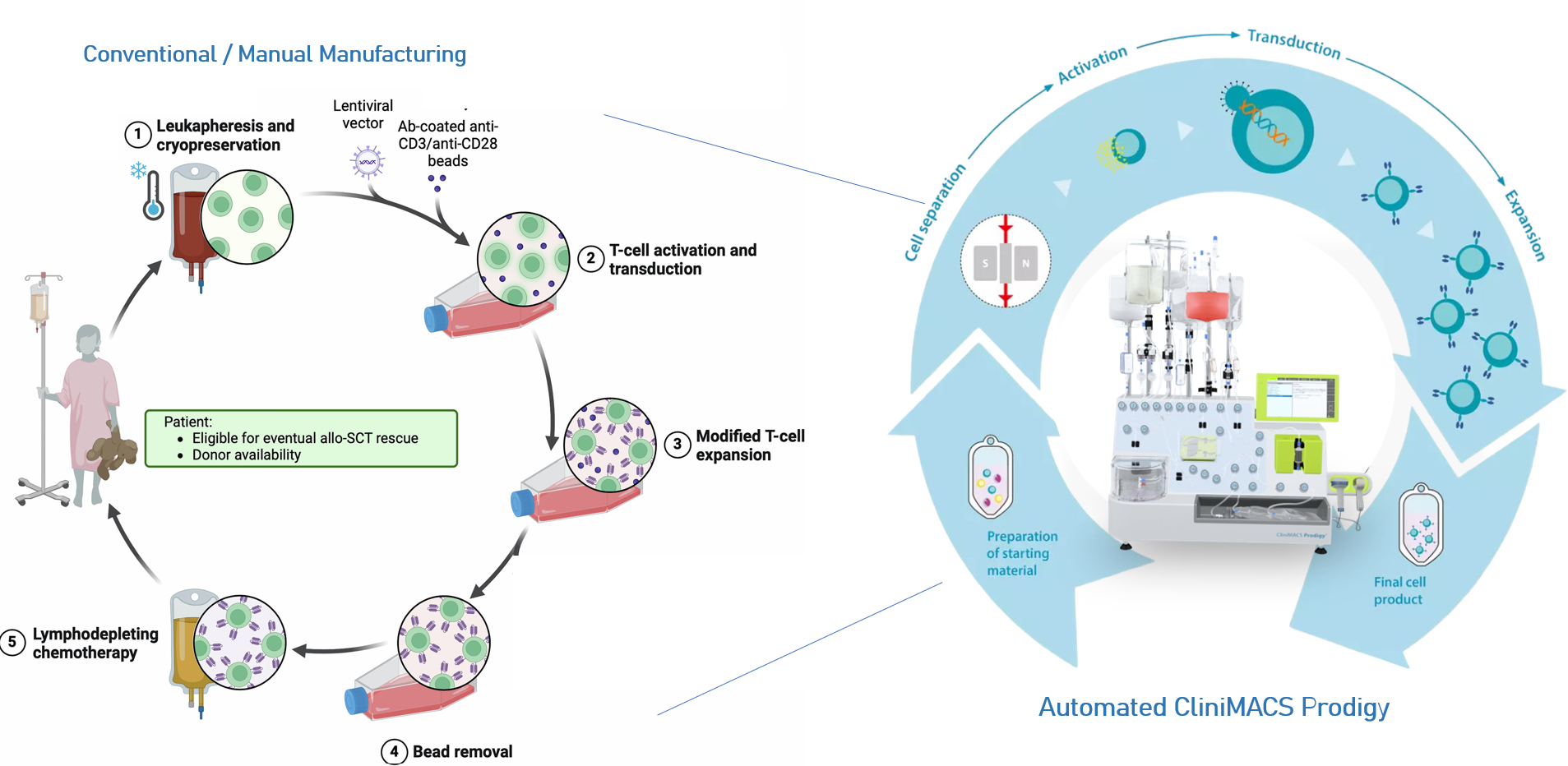 Manual vs automated manufacturing of CAR-T Cells
Image sources:
Source 1 |
Source 2
Manual vs automated manufacturing of CAR-T Cells
Image sources:
Source 1 |
Source 2
4.a ⚖️ How much would I need to manufacture ?
The scale I define is manufacturing enough therapy for the approximate annual worldwide population of patients with high-risk neuroblastoma.
A global analysis estimated approximately 5,560 new neuroblastoma cases in children aged 0–14 years in 2021. Approximately half of neuroblastoma cases are classified as high risk.
Therefore:
2,780 potential high-risk patients/year
A recent phase 1/2 study of GD2-CART01 used a target dose of:
I will use 20 kg as an assumption.
For one 20-kg patient:
2 × 10⁸ CAR⁺ T cells
Therefore, the approximate annual number of infused CAR-positive cells for 2,780 patients would be:
= 5.56 × 10¹¹ CAR⁺ T cells
or approximately:
556 billion therapeutic CAR-positive T cells per year
However, because the proposed treatment is autologous, approximately 2,780 separate patient-specific manufacturing batches per year would be required.
4.b ⏳ How long would it take?
Published automated CAR-T manufacturing processes using the CliniMACS Prodigy typically require approximately 7–13 days, depending on the product and manufacturing process.
I will assume a 12-day manufacturing cycle. One instrument continuously occupied by 12-day manufacturing runs could theoretically complete:
≈ 30 runs per year
Since real facilities cannot operate at 100% utilization (time for scheduling, setup, failures, maintenance, etc.), assuming 80% effective utilization:
≈ 24 patient batches per instrument per year
For 2,780 patients:
≈ 116 parallel manufacturing instruments
So, under these assumptions, treating every newly diagnosed high-risk neuroblastoma patient would require approximately 100–120 parallel automated manufacturing units. The actual number could be higher because the proposed synthetic circuit is considerably more complex than a conventional single CAR.
SynNotch receptors, inducible CAR expression, cytokine modules and negative-feedback circuitry increase the genetic payload and may reduce genetic-modification efficiency or cell yield.
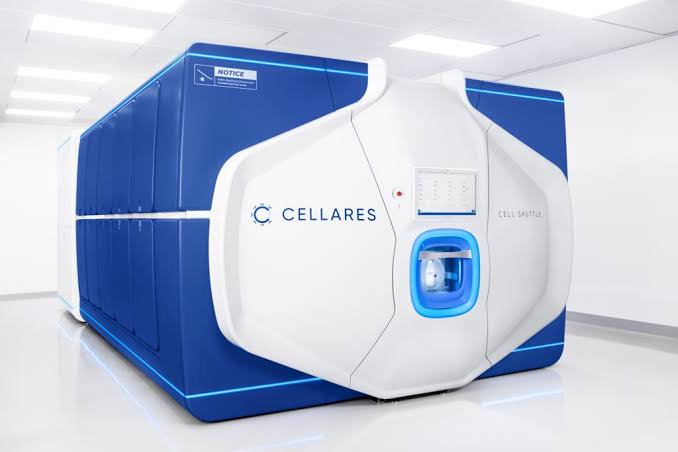
Thus, at a larger commercial scale, I would consider transferring the manufacturing process to a high-throughput closed platform such as the Cellares Cell Shuttle, which can handle up to 16 independent cartridges asynchronously, meaning different patient batches can run simultaneously.
For a 7-day process, the company reports about 800 batches/year per Cell Shuttle:
÷
800 batches/Cell Shuttle/year
≈ 3.5 Cell Shuttles
So theoretically, only 4 Cell Shuttles could provide the nominal manufacturing throughput required for 2,780 patient-specific batches per year.
Laboratory prototyping
At the prototyping stage, I would therefore initially manufacture and test the system at laboratory scale.
Process development & clinical scale
Only after determining genetic-modification efficiency, activation kinetics, cell fitness and functional performance, the manufacturing process could be transferred to a closed platform such as the CliniMACS Prodigy for process development and clinical-scale production.
Commercial scale
At larger commercial scale, manufacturing could be transferred to a high-throughput platform such as the Cellares Cell Shuttle to enable parallel production of multiple autologous patient batches
5.🧠❓ What do I not know yet?
❓ whether the dual-antigen logic operates with appropriate kinetics and specificity in neuroblastoma
I would need to determine how much GD2 is required to activate the SynNotch receptor, how rapidly GPC2 CAR appears after priming, how long CAR expression persists after the priming signal disappears, and whether heterogeneous or antigen-low tumor populations can escape the circuit.
🧬 whether such a complex genetic program can be manufactured reproducibly without compromising T-cell fitness
SynNotch-CAR constructs are already substantially larger than conventional CAR constructs. Adding cytokine, reporter and feedback modules may decrease vector production and genetic-modification efficiency or generate heterogeneous cell populations. The architecture may therefore eventually need to be simplified, divided between multiple genetic constructs, or implemented using an alternative genome-engineering strategy.
⚖️ The balance between T-cell persistence, antitumor activity, and safety.
Activation-dependent membrane-tethered IL-15 may enhance T-cell survival and persistence, but its expression level and duration would need to be optimized to avoid excessive stimulation, uncontrolled expansion, or toxicity.
Thus, the success of the project would ultimately depend not only on whether each individual module works, but also on whether the complete engineered cell behaves as a stable and predictable biological system.