Week 1 HW: Final Project Ideas
For your first homework, propose and describe one idea for something you would like to biomanufacture. This could be medicine, material, food, energy, an art, design, or architectural artifact, or beyond. Draw from your own background and interests for inspiration.
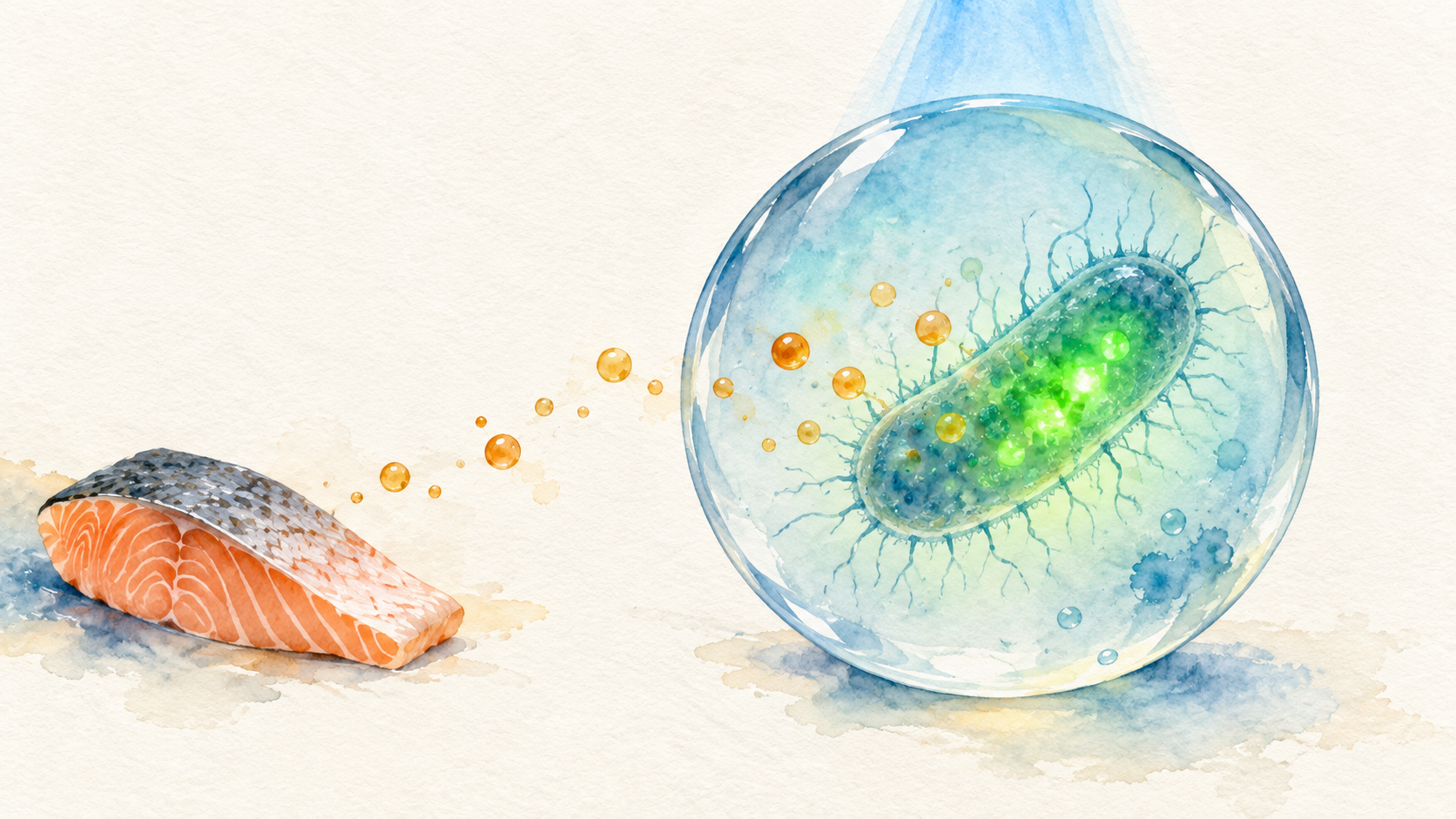
What you would like to biomanufacture and why?
I would like to make a biosensor that gives a visible indication of the foods condition. The idea comes from a problem I have encountered since moving from China to the United States. Ordering food here is less convenient and more expensive than I am used to, so I usually cook for myself. To save time, I often prepare several meals at once. However, when I take a container out of the refrigerator a few days later, I am sometimes unsure whether I should still eat it. Therefore, I want to biomanufacture a biosensor to help with that decision.
After looking some papers, I think histamine is a good starting target in susceptible food. As I understand it, microbial activity during spoilage can convert amino acids into biogenic amines through decarboxylation. For example, histidine becomes histamine, lysine becomes cadaverine, ornithine becomes putrescine, and tyrosine becomes tyramine. These compounds can be harmful at elevated concentrations, and detecting them could help assess the condition of food.
I found several possible ways to detect these amines. One uses enzymes: certain enzymes like diamine oxidase (DAO) oxidize histamine, and this reaction can be coupled to a color change. Another uses aptamers, which are short, single-stranded DNA or RNA molecules that fold into three-dimensional shapes and bind their targets with high affinity and specificity. An aptamer-based sensor may need a fluorescent label or gold nanoparticles to produce a readable signal (referenece). For this project, I would like to engineer a microorganism as a whole-cell biosensor (WCB). As histamine or another target amine increases in the sample, a responsive transcription factor would trigger green fluorescent protein (GFP) expression or produce something with color, producing a signal that could be read qualitatively or measured quantitatively.
Given the volume of fresh fish and meat packaged for retail sale in the United States and the World (reference), I think there could be a practical use for this kind of sensor. Food waste and foodborne illness are also part of my motivation.
What living system would you use?
I found a related study that uses Pseudomonas putida as the host for a histamine biosensor (reference). I could also try Escherichia coli because it has a broad set of genetic tools and well-established engineering methods. Histamine uptake could be a limitation, though, so I may need to introduce a transporter. I am also interested in testing extremophiles, since they may differ in how they take up these amines (reference).
For the prototype, I plan to use aqueous extracts of fish or prepared meals as the input samples.
The proposed sequence is following. A biogenic amine enters the cell through transportprotein and binds to a transcription factor, changing its conformation and how it interacts with regulatory DNA. This allows RNA polymerase to initiate transcription, followed by translation of GFP. The output would be green fluorescence intensity. I see this amplification through gene expression as a potential advantage over the enzyme- and aptamer-based approaches I considered.
I would like to explore a few additional designs. One is to expand detection to cadaverine, tyramine, putrescine or other indicators. Another is to introduce logic gates. For example, a strong color change could occur only when both histamine and putrescine exceed proposed safety thresholds, with the aim of reducing false positives. I would also like to investigate whether the microorganisms could metabolize and remove these compounds while detecting them.
How would you use automation?
For construction and screening, microfluidics could allow me to encapsulate and incubate individual cells and increase screening throughput. A liquid-handling robot such as Opentrons could automate repetitive steps. Connecting these tools into a coordinated workflow could form the basis of a cloud lab. Much of this work is repetitive and time-consuming, which is why automation would be useful. It could also improve the consistency and accuracy of liquid handling while allowing me to test more variants.
I could also use tools such as AlphaFold to guide changes to the transcription factor’s ligand-binding pocket. I am interested in combining AI with synthetic biology to make the design of bacterial sensors more efficient (reference).
How much would you need to make, and how long would it take?
How much?
Biomass per test
Assuming a 100 µL reaction at OD600 = 0.5:
0.1 mL × 0.5 OD × 0.3 mg DCW/(OD·mL) = 0.015 mg DCWI would budget 0.1 mg dry cell weight (DCW) per test, allowing roughly a sevenfold margin for processing losses and quality control.
Prototype and pilot scale
Semester prototype:
(500 variants × 6 concentrations × 3 replicates) + 1,000 validation tests = 10,000 tests10,000 × 0.1 mg = 1 g DCWHypothetical Boston pilot:
50 sites × 2 batches/week × 60 samples/batch × 50 weeks = 300,000 tests/year300,000 × 0.1 mg = 30 g DCW
The pilot assumes individual testing, using the sampling example in this reference.
Fermentation volume
Assuming a yield of 50 g DCW/L and doubling the volume to allow for recovery losses:
(30 g ÷ 50 g/L) × 2 = 1.2 L of cultureA 2 L fermenter could therefore supply the estimated pilot biomass.
Cost
Assuming batch production, my estimate is $0.10 to $0.50 per test. Freeze-drying, dispensing, packaging, and QC may cost more than growing the cells.
How long?
Prototype: about one semester. I would start with a small set of constructs, then test the sensor in food extracts and develop a stable formulation.
Manufacturing: about one week for cell production and processing. Dispensing, packaging, and QC would determine the full production timeline and may require dedicated equipment.
Each assay: about 1.5 to 2 hours. This could suit laboratory batch testing. A household version would need a faster result, so I would begin with laboratory use.
What don’t you know yet?
My first concern is the food matrix effect. Could salt, low pH, proteases, or lipids in fish extracts damage the cells, quench GFP fluorescence, or alter promoter activity during the assay? I would measure how the signal responds to different sample concentrations and check cell survival rates.
Readability by eye is a separate problem because GFP requires excitation light. I would therefore also explore a colorimetric or pigment-based reporter. Options include lacZ with an added substrate or a pigment biosynthesis pathway (reference).
Another concern is shelf life and survival after freeze-drying. Cell instability and limited shelf life are common constraints for whole-cell sensors. I would explore accelerated aging estimates and compare freeze-drying with other preservation methods.
Finally, I still have a lot to learn about synthetic biology, including how to design DNA constructs and engineer bacterial systems for our purpose (reference). And that’s why I’m in this course.
AI use
I used AI tools, including GPT, Gemini, and Claude, to brainstorm ideas, find literature, generate images and develop preliminary estimates.