Week 6: Non-Model Organisms
Throughout this course you have been exploring biomanufacturing in diverse platforms: prokaryotic cells, eukaryotic cells, and cell-free systems. In this assignment you will dive into the world of non-model organisms, using the Cultivarium Portal and Data Vault.
“Non-model organisms” refer to organisms that are not “model organisms”, i.e., organisms that have been commonly studied and utilized in the lab. Some examples of model organisms include Escherichia coli and Saccharomyces cerevisiae. Despite the staggering amount of microbial diversity in the biosphere, only an estimated ~26% of it has been studied in the lab 1.
You will take the product you proposed in HW1 and explore what non-model microbes may naturally produce that product or perform related functions. You will utilize the Cultivarium Portal to identify non-model strains of interest, and put together an experimental plan.
Part 0- Getting started on The Cultivarium Portal
Your email address has been pre-approved for Portal access.
1. Create your account
Create your account through the link in the Welcome email, or using this link.
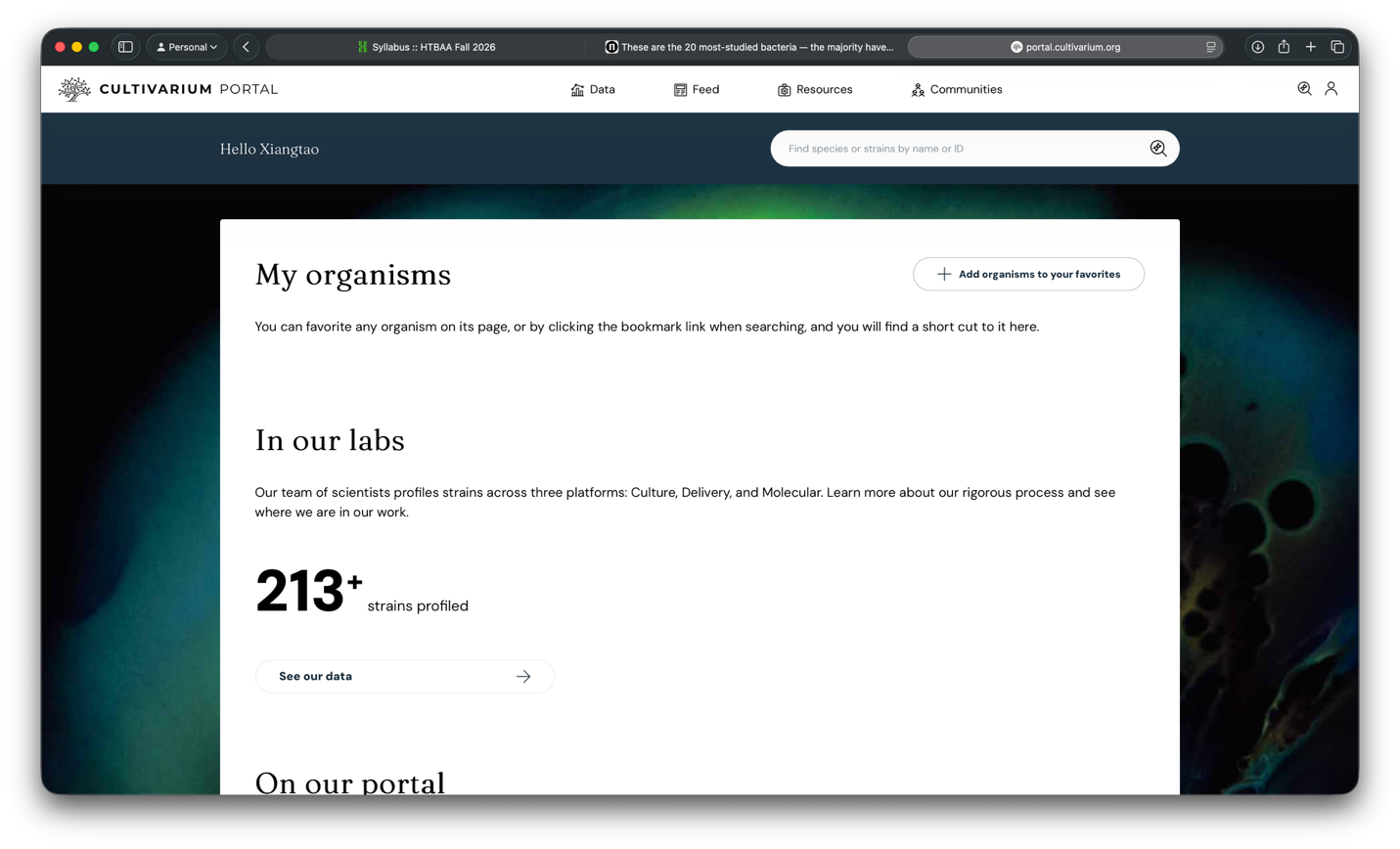
This is Cultivarium portal I registered.
2. Explore the Portal
Click around and explore- Data, Taxonomy Browser, and the search bar are good places to start. Notice- what species have you heard of? What types of data are available?
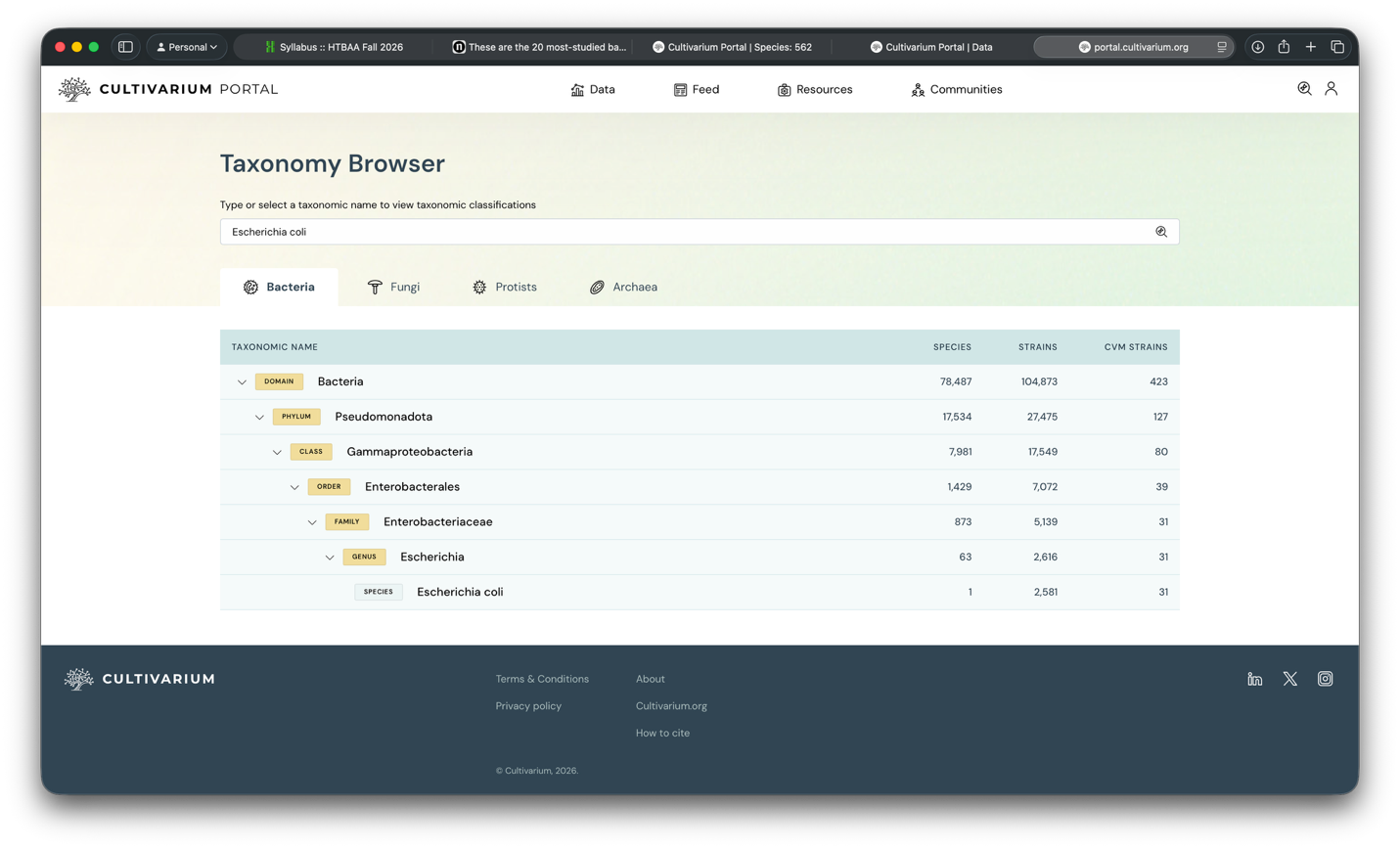
I used Escherichia coli as a demo.
The platform shows me the taxonomy, which is very helpful to help me gain an insight of the location of the species in the kingdom of the microorganisms. Domain, Phylum, Class, Order, Family, Genus, Species. Each level narrows the classification and gets more specific.
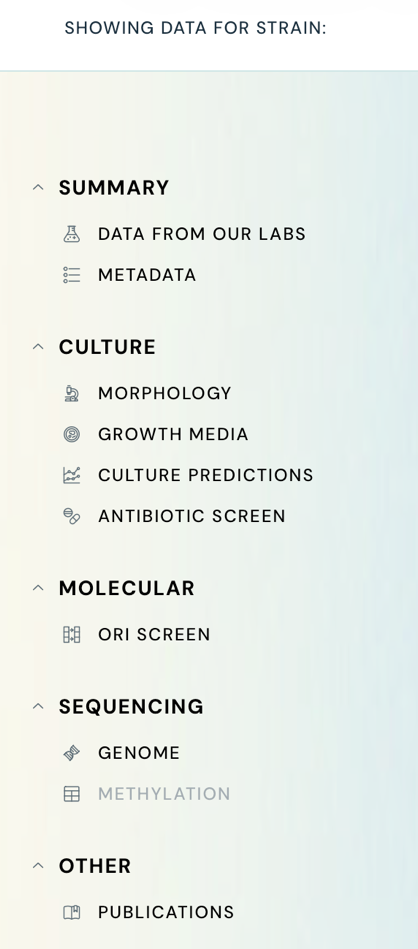
There is a bunch of data related to it, including synonyms, description, reported methods. Some bacteria have more data like how to grow it, morphology data, growth media data, culture predictions, antibiotics, ORI screen, Genome and publications related to this type of strain.
Part 1- Explore non model organisms
1. Choose an organism
Identify a non-model organism that naturally produces your target product. You can use the Portal AI, MicroScopus, or another tool to conduct this search. If not directly available, search for microorganisms that carry related genes or have a similar industry application.
Deliverable: What non-model organism did you choose, and why? Justify their relevance in your write-up. Describe the method you used to identify this organism.
I want to detect histamine in food to help assess its quality. Besides the whole cell biosensor and CFPS biosensor I designed before, another option is to manufacture the enzymes for a color reaction. For example, diamine oxidase (DAO) can oxidize histamine and produce $\mathrm{H_2O_2}$. Horseradish peroxidase (HRP) can then use $\mathrm{H_2O_2}$ to oxidize a chromogenic substrate, such as TMB, and produce a blue color. This approach could work outside a lab and fit onto a test strip. It also has the potential to become a product people can use at home.
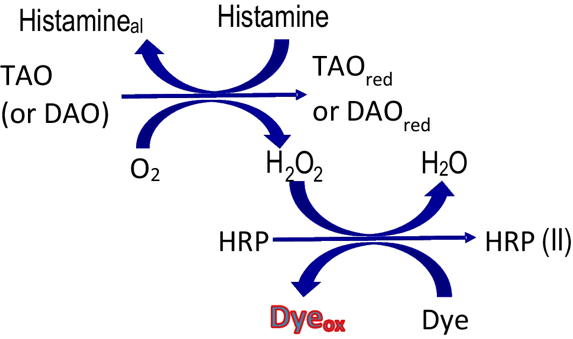
Source: Sanz-Vicente et al., 2023.
So I wanted to find a non-model organism that could produce both enzymes.
However, I did not find an organism that produces both DAO and HRP, but I found Rhodococcus opacus, which has enzymes with similar functions. Its amine oxidase (AO2) has been reported to oxidize histamine and produce $\mathrm{H_2O_2}$. Foster et al., 2012.
An amine oxidase is an enzyme that catalyzes the oxidative cleavage of alkylamines into aldehydes and ammonia:
$$ \mathrm{RCH_2NH_2 + H_2O + O_2 \rightarrow RCHO + NH_3 + H_2O_2} $$
R. opacus also has dye-decolorizing peroxidases (DyPs), which can use $\mathrm{H_2O_2}$ to oxidize dyes, similar to HRP. The DyP study used R. opacus 1CP. So I decided to explore this species for the later quesions. DyP study, 2021.
I searched for “diamine oxidase” in the Cultivarium Portal’s MicroScopus and found “Role of amine oxidase expression to maintain putrescine homeostasis in Rhodococcus opacus”.
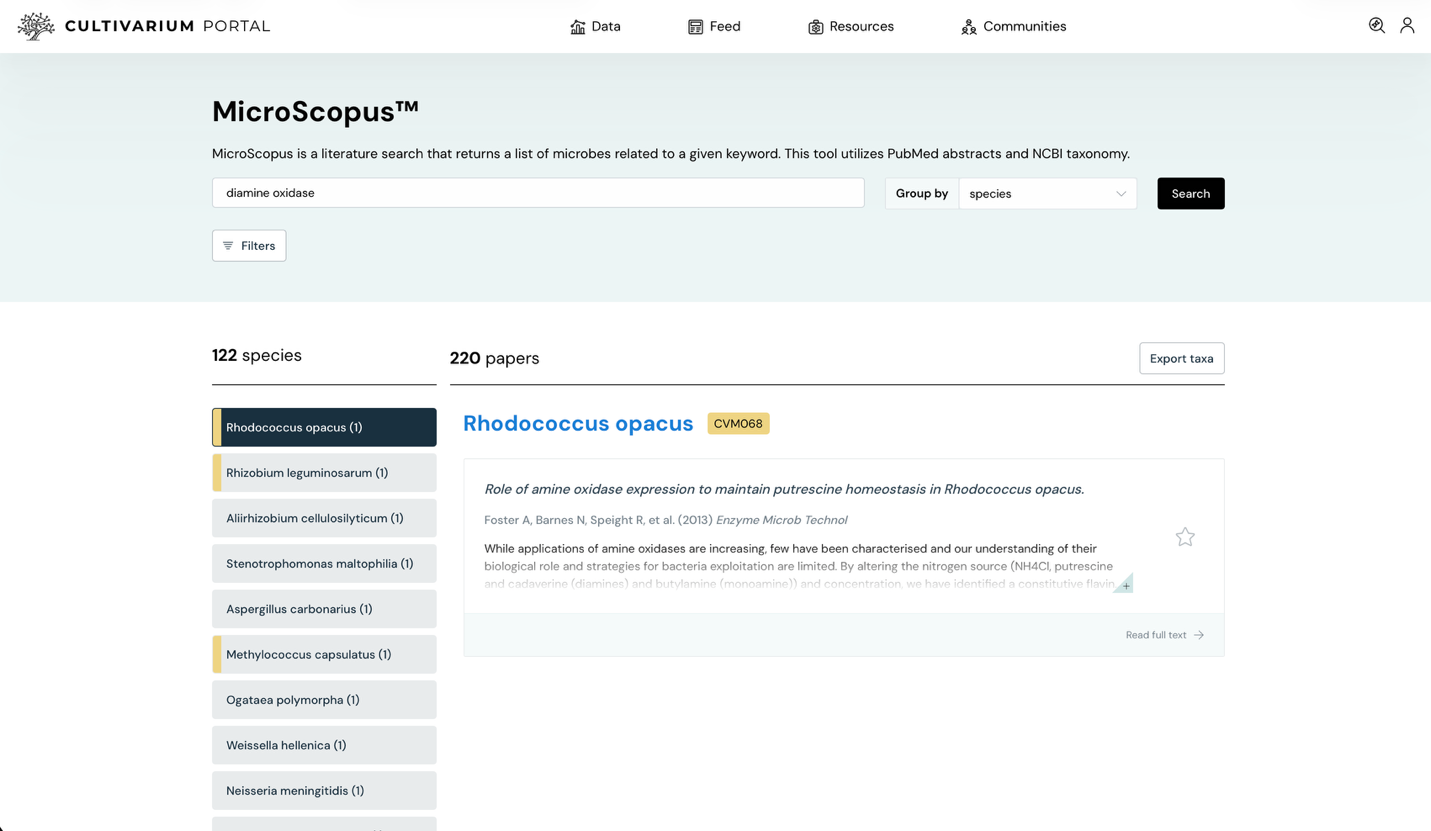
I then used AI to help find “Characterization of Two Hydrogen Peroxide Resistant Peroxidases from Rhodococcus opacus 1CP”, which confirmed that R. opacus 1CP has DyPs.
2. Select a strain
Navigate to that organism’s page on the Cultivarium Portal. Select a specific strain (“strain information” tab). Examine what types of information are readily available for that strain?
Deliverable: Copy and fill out the table below. Where information is unavailable, leave blank. In a separate paragraph, describe what you are able to do with this information. What information is missing, and why might you need that information?
| Category | Data |
|---|---|
| Species Name | Rhodococcus opacus |
| Strain Name | Rhodococcus opacus DSM 43205 |
| Link | Cultivarium Portal strain page |
| Growth Media and Temperature | HCM, 30°C |
| Susceptible antibiotics, and MIC90 | Apramycin: 32; Carbenicillin: 32; Chloramphenicol: 2; Erythromycin: 8; Gentamicin: 16; Kanamycin: 64; Rifampicin: 1; Spectinomycin: 256; Streptomycin: 32; Thiostreptone: 1. All values are in μg/mL. |
| Functional ORIs | p15A, Low confidence |
| Genome size | 9,432,136 bp |
| Number of publications listed | 9 |
Source: Cultivarium Portal, R. opacus DSM 43205.
I can start by growing the strain in HCM at 30°C and compare its appearance with the Portal images to look for signs of contamination. I can also use the antibiotic susceptibility data to choose a selectable marker. p15A is a candidate ORI for an expression vector. For my histamine test strip project, I still need to test whether DSM 43205 has amine oxidase activity toward histamine and whether it expresses a DyP that can produce a color change. These results will help me decide whether to use it for the food sensor prototype.
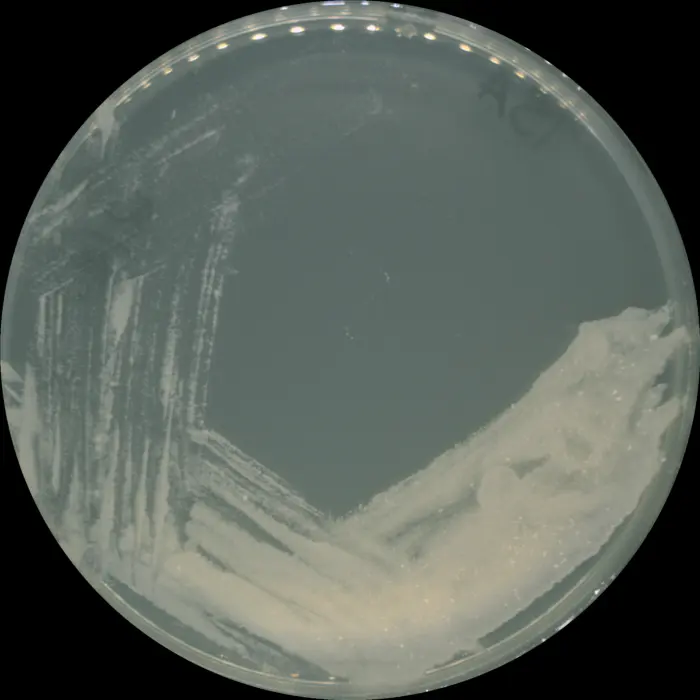
Colony morphology on agar. Source: Cultivarium Portal.
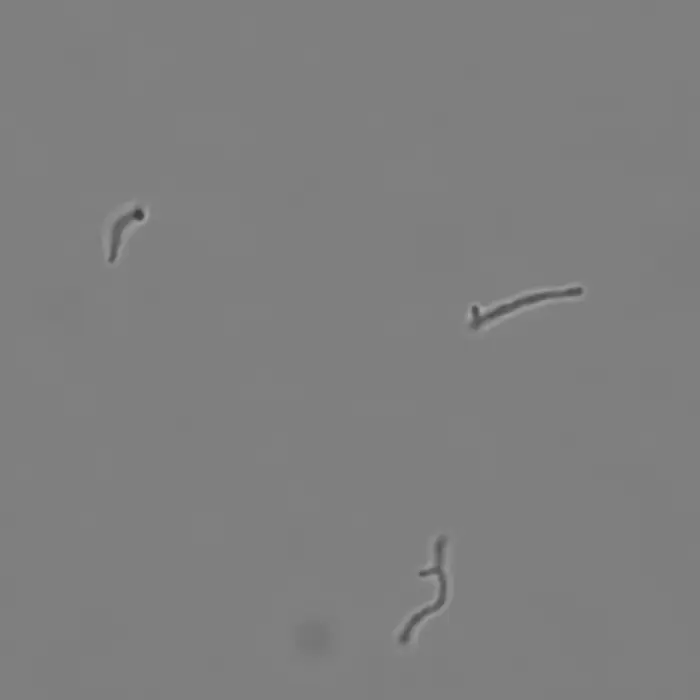
Microscopic morphology. Source: Cultivarium Portal.
3. Examine genetic methods
Navigate to the “species information” tab. The Reported Methods section lists the genetic methods found in literature for that species.
Deliverable: List all genetic methods available for that species. How many methods are available, and what’s the range of years (oldest-newest) for genetic research on this organism? If none are available, say so. What is the suggested next closest organism, and what genetic methods are available there?
Reported methods:
| Category | Genetic method | Number of publications | Years (oldest-newest) |
|---|---|---|---|
| Transformation | Electroporation | 3 | 1999-2008 |
| Transformation | Conjugation | 1 | 1986-1986 |
| Transformation | Other | 1 | 2009-2009 |
| Genetic Engineering | Replicating Plasmid | 6 | 1999-2014 |
| Genetic Engineering | Homologous Recombination | 2 | 2021-2024 |
| Genetic Engineering | Recombineering | 1 | 2021-2021 |
| Genetic Engineering | CRISPRi | 2 | 2018-2021 |
| Genetic Engineering | Other | 12 | 2008-2022 |
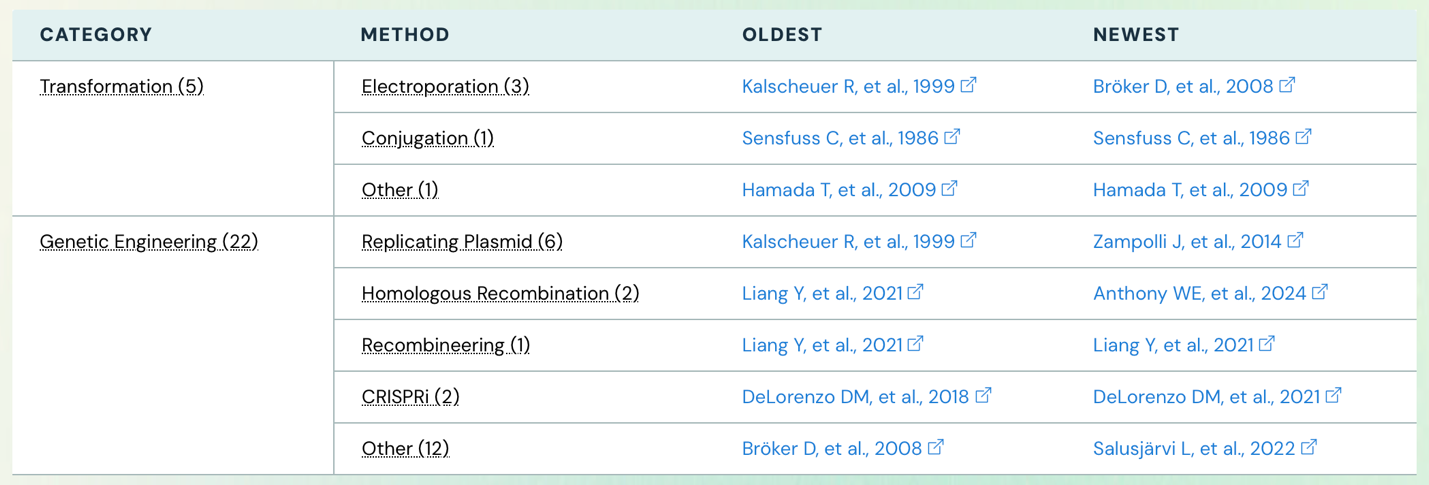
Source: Cultivarium Portal, R. opacus species information.
Part 2- Explore neighbor strains
One strategy for when organism information is limited is to use available information from phylogenetically related species or strains. We call these strains “neighbors”.
1. Identify a neighbor strain
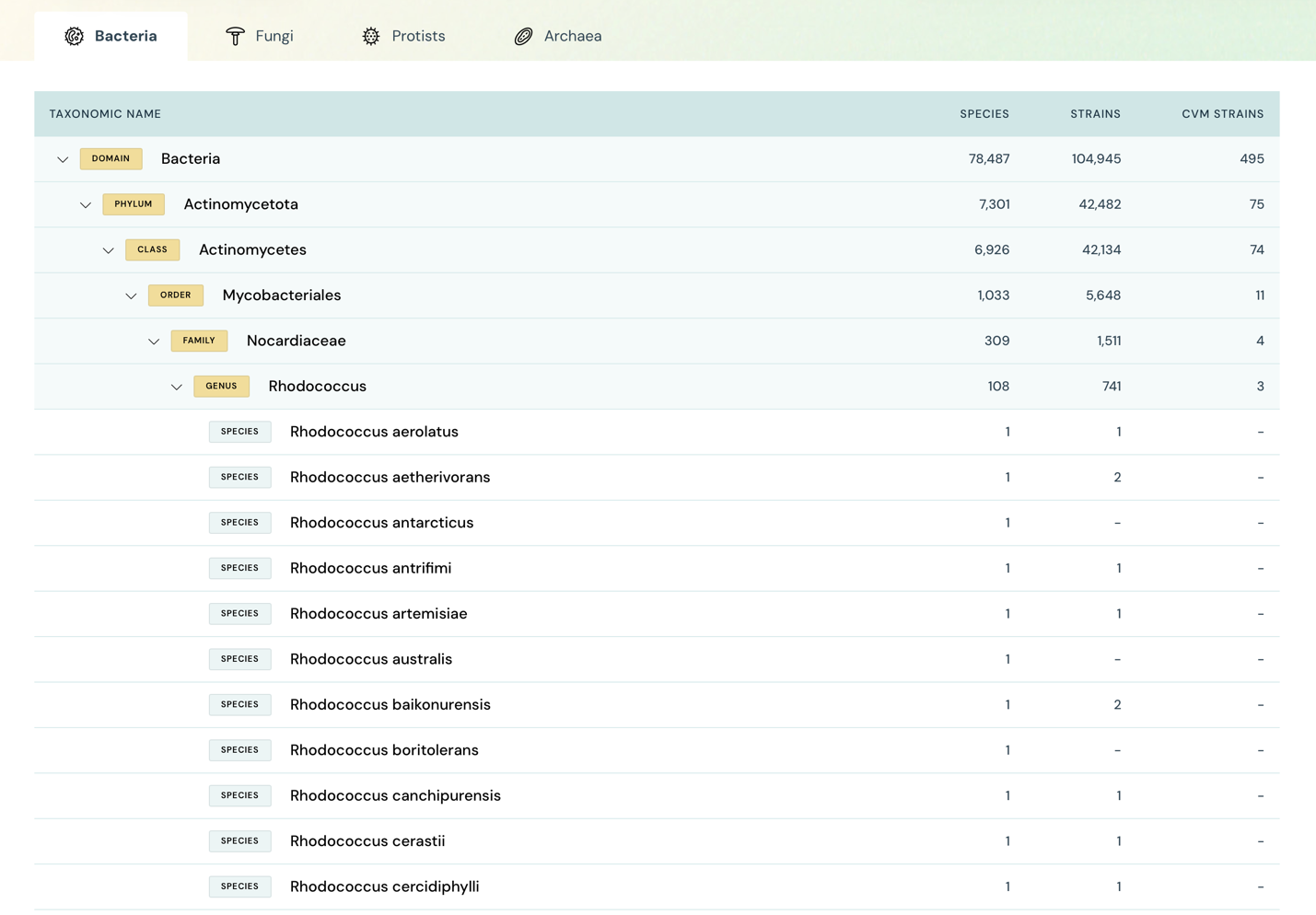
For your species identified in Part 1, identify the nearest neighbor strain with available information to fill out the missing details. (HINT: traverse up the Taxonomy Browser and search for CVM strains)
Deliverable: Copy and fill out the table below. For each category with missing information in Part 1, fill out information from a neighbor strain.
I used the Taxonomy Browser to move up from Rhodococcus opacus to the genus Rhodococcus and found a neighbor strain with Cultivarium experimental data: Rhodococcus erythropolis ATCC 4277 = DSM 43066 = CVM049.
| Neighbor Species | Related level (e.g., genus, family) | Category | Data |
|---|---|---|---|
| Rhodococcus erythropolis A-0201, N11 | Genus: Rhodococcus | Genome size | 6,605,063 bp |
| Media | HCM TE | ||
| temperature | 30°C |
Sources: Cultivarium Portal; Institut Pasteur strain record.
Part 3: From Information to Delivery- What don’t you know yet?
Review the data you gathered above. What do you know about your target strain, and what information is still missing? How confident do you feel about your ability to design an experiment with this strain? Identify the 2-3 biggest unknowns or risks. For example: Will the growth conditions from a nearest neighbor translate directly? What about the functional plasmid ORIs?
For each, state how you would find out: the experiment you would try next. What are your readouts, and what would they tell you?
My target strain is Rhodococcus opacus DSM 43205 (ATCC 51881 / CVM068). It can grow in HCM at 30°C, and the Portal provides antibiotic MIC90 data. Cultivarium Portal.
The main unknowns are:
p15A gave a positive result in the origins of replication (ORIs) screen, but the confidence is low, so stable plasmid maintenance could be a problem. I would introduce a p15A plasmid using the electroporation method reported in the literature, include a no-DNA negative control, and measure cell survival and plasmid retention after passaging. These results would help me investigate cell damage, failed DNA delivery, and unstable plasmid maintenance.
I do not know whether this strain has both histamine oxidation and DyP color activity, or whether the two reactions will work reliably together. I would first test histamine oxidation, and then test ABTS oxidation after adding $\mathrm{H_2O_2}$ separately. I would include standard enzymes as positive controls, no-substrate controls, and inactivated-protein controls. The readouts would be histamine consumption, for example by HPLC, $\mathrm{H_2O_2}$ production, and the change in ABTS absorbance at 420 nm. I would then design experiments to increase the yields of both enzymes through overexpression and test the two reactions together. DyP ABTS assay.
Part 4: Final Project
Reflect on your final project proposal. How might the resources shared with you (Cultivarium Portal, Vault, PRISM) help with your living system design? Identify a specific tool and its relevance, and how you intend to use it for your project.
My final project tries to develop an easy way to detect and sense food spoilage, especially histamine. I wanna build a test strip for testing histamine in food maybe in the future.
I think the most directly useful resource is the range of datasets in the Cultivarium Portal. They help me learn about microbes with specific functions beyond the usual model organisms and broaden what I can consider for my project. Callaway, 2025. I am especially interested in extremophiles, those are organisms that live in extreme environments. Natural selection has produced these amazing organisms, and we can use and engineer them.
Through searching and reading, I learned about enzymes that oxidize histamine and enzymes that catalyze $\mathrm{H_2O_2}$ to oxidize dyes. I can use these microbes and genes to build my histamine sensor. The platform also provides growth media and temperatures, antibiotic susceptibility screens, genetic methods, plasmid ORI options, genome sizes, and related publications. These data help me choose an organism and design experiments for it.
I plan to keep using the Portal to find other microbes that might help with this project. For example, I could explore the protective system of D. radiodurans, where manganese ions and small peptides help protect proteins. Daly et al., 2010. I want to see whether a similar system could protect our enzymes and make shipping cheaper and storage longer.
AI
The Cultivarium Portal has an AI agent designed to assist me with this research. OpenAI ChatGPT also helped organize my notes, check technical terms, polish the English, and format this page.
References
Callaway, E. These are the 20 most-studied bacteria - the majority have been ignored. Nature 637, 770-771 (2025).
Sanz-Vicente, I., Rivero, I., Marcuello, L., Montano, M. P., de Marcos, S., and Galbán, J. Portable colorimetric enzymatic disposable biosensor for histamine and simultaneous histamine/tyramine determination using a smartphone. Analytical and Bioanalytical Chemistry 415, 1777-1786 (2023).
Foster, A., Barnes, N., Speight, R., and Keane, M. A. Identification, functional expression and kinetic analysis of two primary amine oxidases from Rhodococcus opacus. Journal of Molecular Catalysis B: Enzymatic 74, 73-82 (2012).
Foster, A., Barnes, N., Speight, R., Morris, P. C., and Keane, M. A. Role of amine oxidase expression to maintain putrescine homeostasis in Rhodococcus opacus. Enzyme and Microbial Technology 52, 286-295 (2013).
Characterization of Two Hydrogen Peroxide Resistant Peroxidases from Rhodococcus opacus 1CP. Applied Sciences 11(17), 7941 (2021).
Daly, M. J., et al. Small-Molecule Antioxidant Proteome-Shields in Deinococcus radiodurans. PLOS ONE 5(9), e12570 (2010).