Hello! I am a Bio-Integrated Designer with backgrounds in Architectural Design. I became super fascinated by the intelligence of biological systems when my work and research ventured into the fields of microbiology.
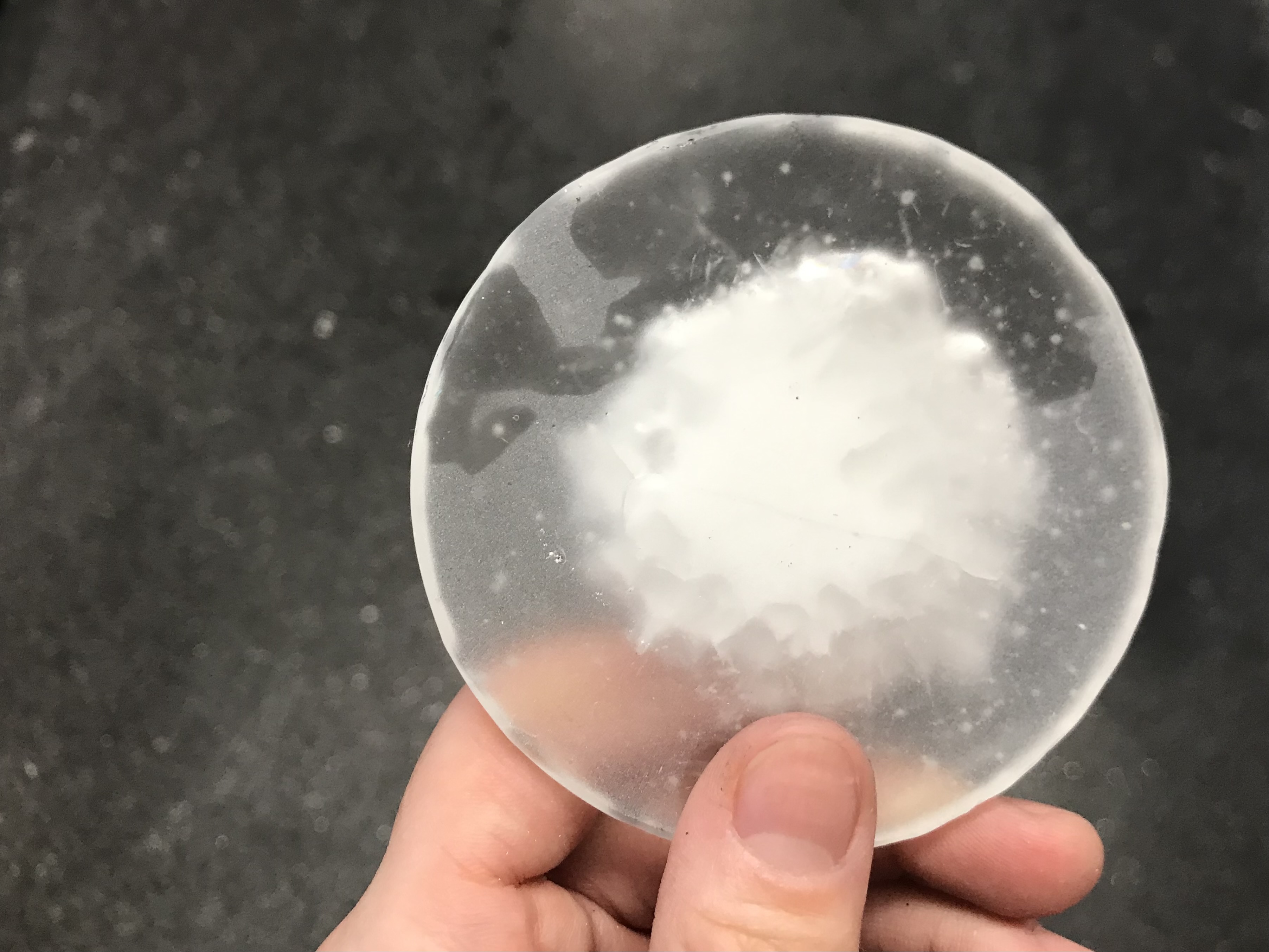
Sneak peek into some of my works: envisioning and experimenting with glass as a porous living interface (teamwork), cultivating algae in biofilm-based systems, making and using small photobioreactors, and extracting EPS from cyanobacteria.
P.S. If you ever find yourself hunting for good food in London, I have a whole list of places saved on google maps, and I’d love to hear your favorite spots, too! :)
See the nav bar on the left to look through my work for How To
Biomanufacture Almost Anything (Fall 2026)!
Subsections of <Xiaomeng Fang> — HTBAA Fall 2026
Week 1 HW: Final Project Ideas
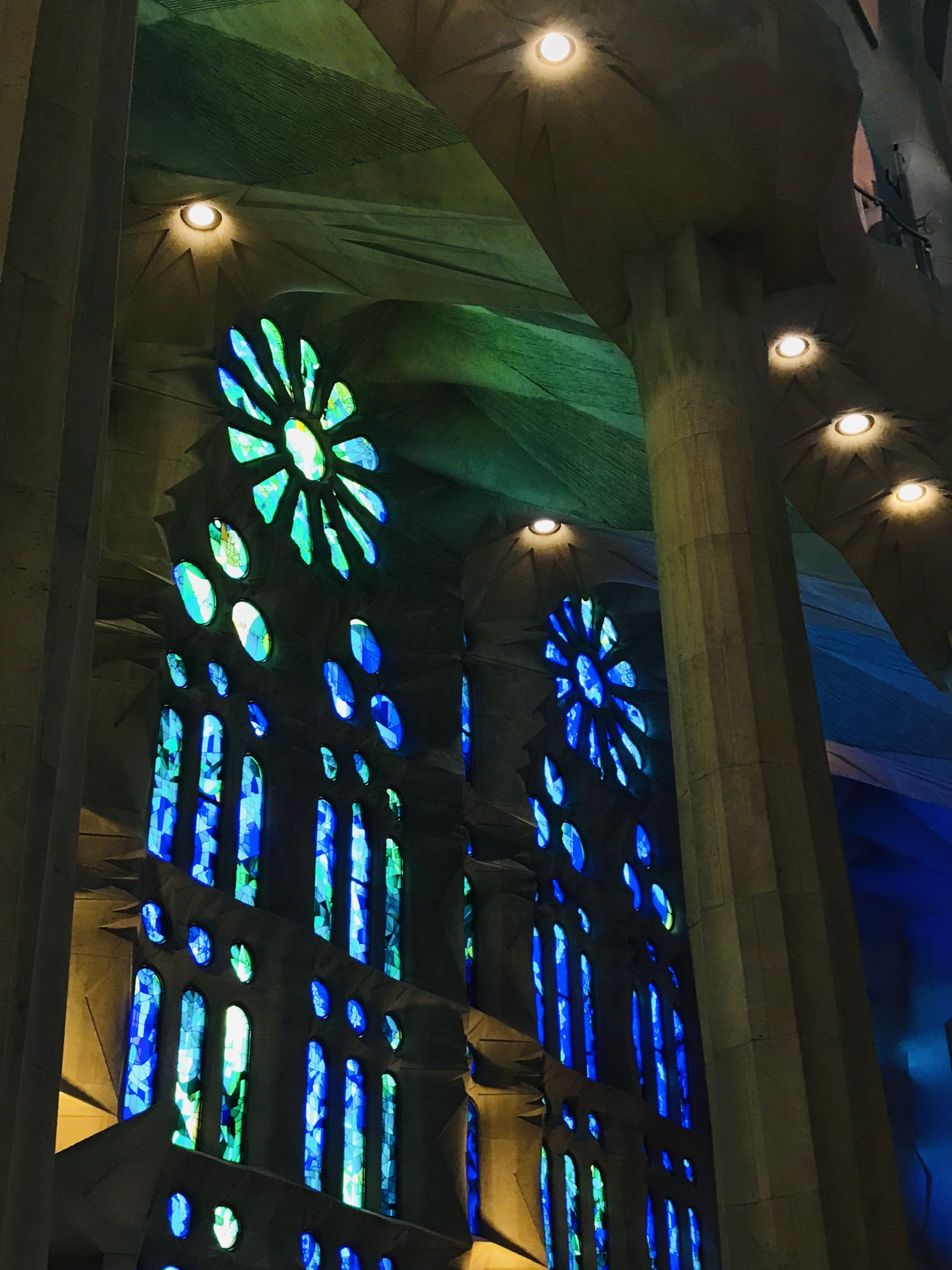
Imagine a lamp made out of stained glass, of which the colours of light are solely determined by the microorganisms living on the glass. The lampshade is living, it breathes, and it changes according to the time of day, or, the time of year.
Only that it does not have to be a lamp, it could become a wall, a window, or a decorative artwork.
Even better? Perhaps the organisms could generate electricity for the lights, perhaps the lights give an indication to something that we can not see with the naked eye, perhaps the whole system takes care of itself, perhaps the glass is not glass, but a biologically-derived alternative.
Why?
Conventional glassmaking is an energy intensive process, requiring high temperature, and prone to contamination such debris. A technically 100% recyclable material, but in reality, flat glass (window glass) are often not recycled properly or downcycled into lower grades of glass such as bottle glass.
The living system used?
I have wondered if it is possible to biomanufacture a porous glass-like substrate without the need for high temperatures, maybe from the silica deposit of diatoms. For the colour-giving microorganisms, algae and cyanobacteria could be considered for green to blue shades. Further research is required to determine microorganisms giving off other colours that could work together, as well as for organisms and processes that could trigger colour-changing effects to reflect micro-environmental shifts in the material.
Use of automation?
The use of automation could be categorised into two different aspects. One that happens during material experimentation, to find optimal pathways for the ‘3D-printing’, and one that works with the final prototype, to report environmental or culture conditions back to itself, to then receive the appropriate maintenance or nutrients.
How much to make and how long?
From the size of a small 5cm by 5cm panel, I will have to research how long it take for diatom deposits, and if there are any bio-catalysts that I can use to speed up the process.
My biggest unknowns
The properties of silica deposits from diatoms, and the entire process for my ‘3D-printing’ thoughts.
The proposed automation processes.
Week 2 HW: DNA Design
Before diving into this week’s homework…
To achieve what I was imaging in homework 1, I can break the material down into two main components: a substrate made out of biosilica, and living pigments. After a discussion with ChatGPT about the expression host, I decided to narrow down, to first focus on the biosilica component from diatoms.
This still gives me a couple of different options for what I want to biomanufacture:
Replicating diatom biomineralisation, silica precipitation in vitro
Putting the genes that are responsible for the processes into a bacteria such as E.coli, to see if E.coli is capable of producing similar peptides that are responsible for silica precipitation in diatoms.
Identifying and manipulating individual genes that influence frustule morphology.
A little bit about diatom biomineralisation
Diatoms build their cell walls in intricate porous structures with hydrated amorphous silica (SiO2). Their silica cell walls can also be referred to as frustules.
In nature, silicon is present in water, dissolved as orthosilicic acid, Si(OH)4, and diatoms use this silicic acid to make silica.
Membrane proteins called silicic acid transporters (SITs), facilitate the transportation of silicic acid from outside of their shells into cytoplasm and silica deposition vesicles.
Silica deposition vesicles (SDVs) is a specific intercellular compartment for where this silicon gets converted into solid biosilicon. It is membrane bound, so silica does not float around in the cytoplasm.
The name of my repository and folder: Xiaomeng-HTBAA-2026 / xiaomeng-project
The expression target
There are many different proteins responsible for silica biomineralisation in diatoms, depending on the species of the diatoms. Silaffins and silacidins in the lumen of SDVs, the acidic inner spaces. There are also proteins responsible for the process, found in the membrane of SDVs, such as Silicanin-1 (Sin1), or the protein family SAPs (Silicalemma-Associated Proteins), that has more to do with the structure, or morphology of the silica.
Possible proteins to look in to:
Silaffin-1 (SIL1), 265 amino acids
maybe silaffin and silacidins are good because they are found in acidic environments
one of the SAPs in Thalassiosira pseudonana?
or Sin1? (that was expressed in E.coli in a research paper), 426 amino acids
(in the process of deciding, leaning towards silaffin and silacidins, one that is well studied)