Week 1 HW: Final Project Ideas
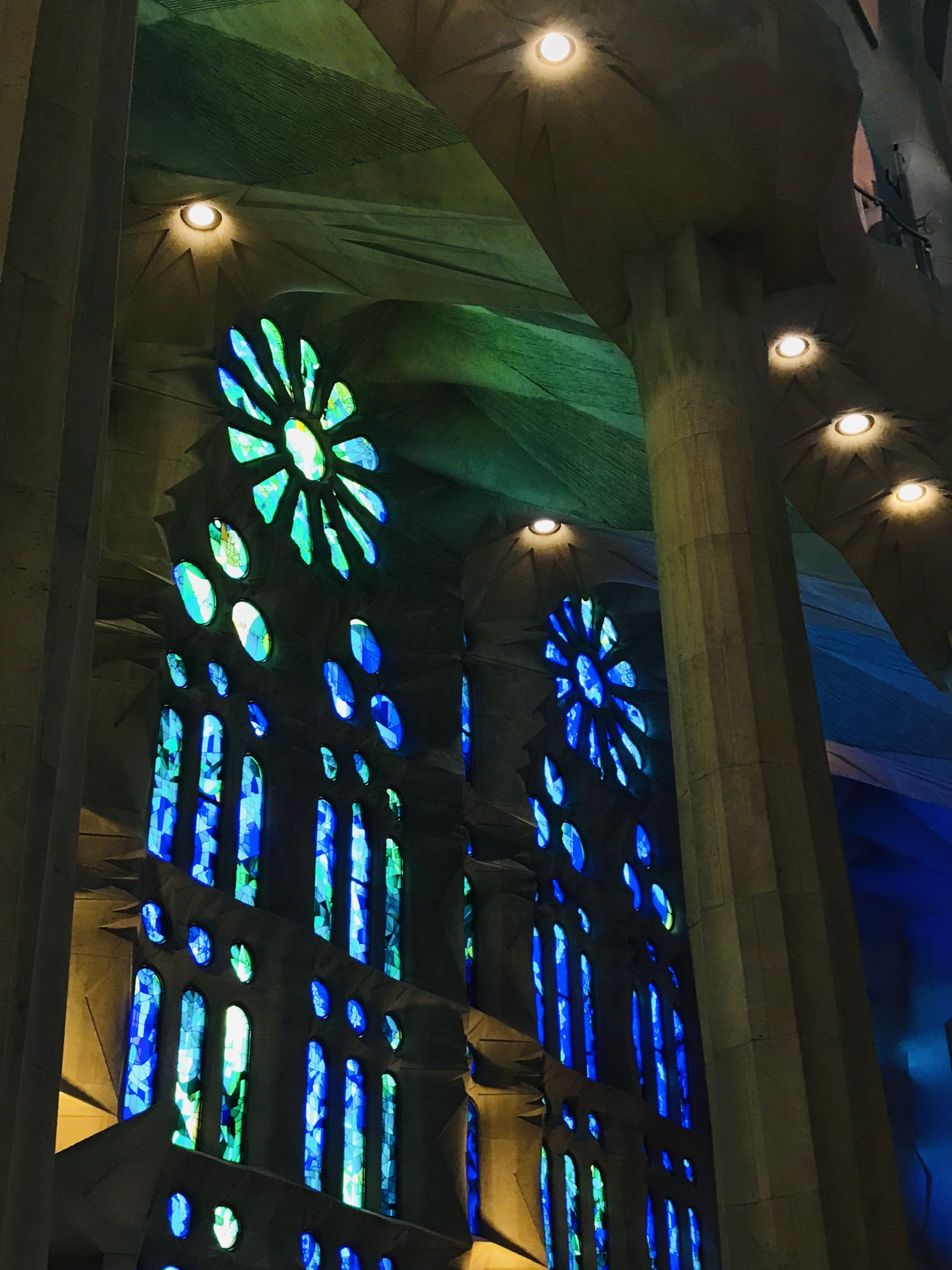
Imagine a lamp made out of stained glass, of which the colours of light are solely determined by the microorganisms living on the glass. The lampshade is living, it breathes, and it changes according to the time of day, or, the time of year.
Only that it does not have to be a lamp, it could become a wall, a window, or a decorative artwork.
Even better? Perhaps the organisms could generate electricity for the lights, perhaps the lights give an indication to something that we can not see with the naked eye, perhaps the whole system takes care of itself, perhaps the glass is not glass, but a biologically-derived alternative.
Why?
Conventional glassmaking is an energy intensive process, requiring high temperature, and prone to contamination such debris. A technically 100% recyclable material, but in reality, flat glass (window glass) are often not recycled properly or downcycled into lower grades of glass such as bottle glass.
The living system used?
I have wondered if it is possible to biomanufacture a porous glass-like substrate without the need for high temperatures, maybe from the silica deposit of diatoms. For the colour-giving microorganisms, algae and cyanobacteria could be considered for green to blue shades. Further research is required to determine microorganisms giving off other colours that could work together, as well as for organisms and processes that could trigger colour-changing effects to reflect micro-environmental shifts in the material.
Use of automation?
The use of automation could be categorised into two different aspects. One that happens during material experimentation, to find optimal pathways for the ‘3D-printing’, and one that works with the final prototype, to report environmental or culture conditions back to itself, to then receive the appropriate maintenance or nutrients.
How much to make and how long?
From the size of a small 5cm by 5cm panel, I will have to research how long it take for diatom deposits, and if there are any bio-catalysts that I can use to speed up the process.
My biggest unknowns
- The properties of silica deposits from diatoms, and the entire process for my ‘3D-printing’ thoughts.
- The proposed automation processes.