Week 6 LAB: Microfluidic Manufacturing
Throughout this course you have been exploring biomanufacturing in diverse platforms: prokaryotic cells, eukaryotic cells, and cell-free systems. In this assignment you will dive into the world of non-model organisms, using the Cultivarium Portal and Data Vault.
“Non-model organisms” refer to organisms that are not “model organisms”, i.e., organisms that have been commonly studied and utilized in the lab. Some examples of model organisms include Escherichia coli and Saccharomyces cerevisiae. Despite the staggering amount of microbial diversity in the biosphere, only an estimated ~26% of it has been studied in the lab.
You will take the product you proposed in HW1 and explore what non-model microbes may naturally produce that product or perform related functions. You will utilize the Cultivarium Portal to identify non-model strains of interest, and put together an experimental plan.
Part 0: Getting Started on The Cultivarium Portal
1. Access the Cultivarium Portal and Explore Available Data Platforms
- Create and verify your account through the Cultivarium Portal access link.
- Explore the Data Vault, Taxonomy Browser, and search functions across sequenced and curated strains to examine available genomic, growth, and phenotypic data.
Part 1: Explore Non-Model Organisms
1. Identify a Non-Model Organism That Naturally Produces Your Target Product or Performs Related Functions
Prompt: Identify a non-model organism that naturally produces your target product. You can use the Portal AI, MicroScopus, or another tool to conduct this search. If not directly available, search for microorganisms that carry related genes or have a similar industry application.
Deliverable: What non-model organism did you choose, and why? Justify their relevance in your write-up. Describe the method you used to identify this organism.
Organism Chosen: Bacillus megaterium (Strain QM B1551)
Justification:
Bacillus megaterium perfectly balances the structural, biochemical, and regulatory requirements of my recombinant fusion biocatalyst (TriSynth-82):
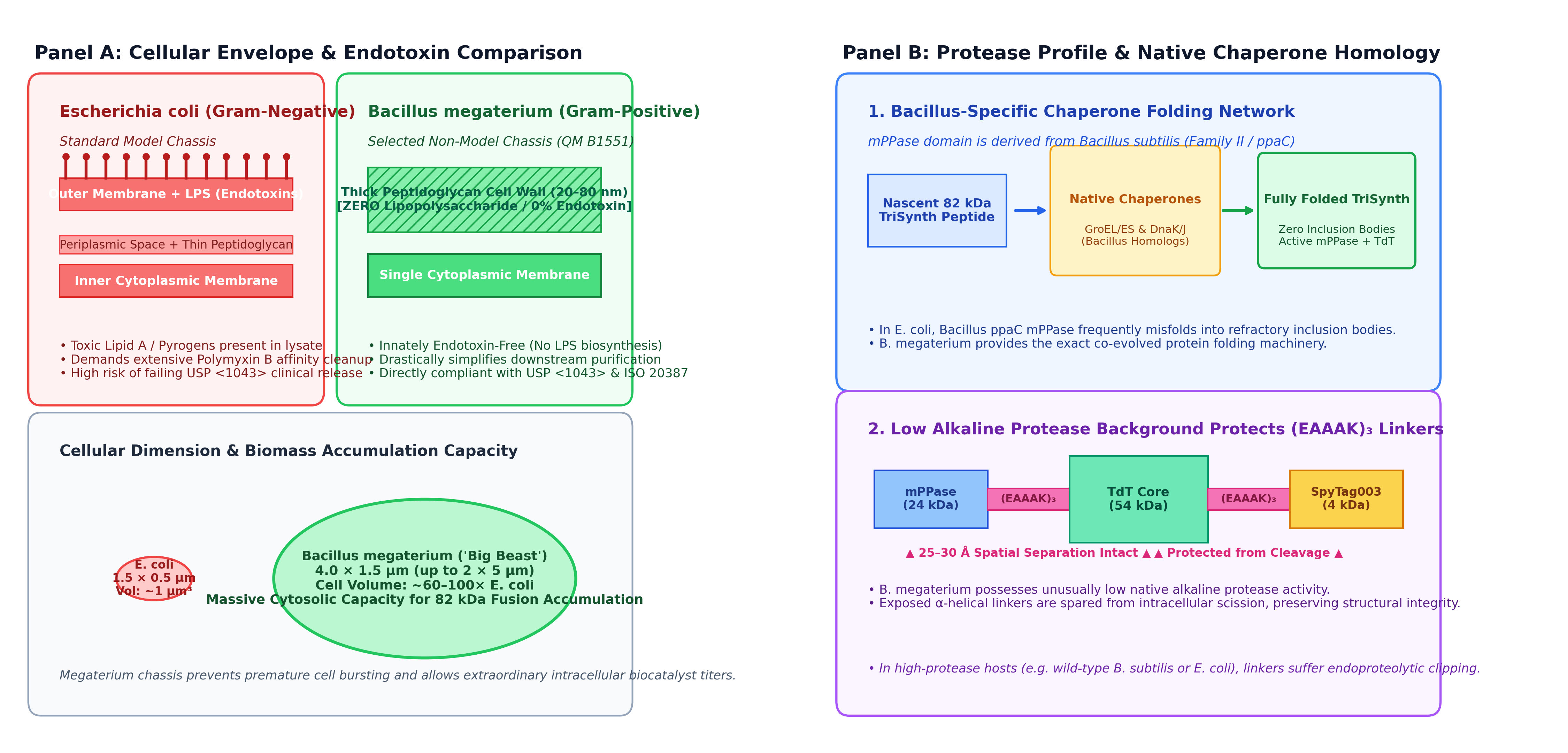
- Native Chaperone Homology for mPPase: Because the monomeric inorganic pyrophosphatase (mPPase) domain is derived from Bacillus subtilis (Family II / ppaC architecture), expressing it in a closely related Bacillus non-model chassis guarantees that native host chaperone networks (GroEL/ES, DnaK/J) will properly recognize and fold the mPPase catalytic core without forming insoluble inclusion bodies (which frequently occur when expressing ppaC in E. coli).
- Innately Endotoxin-Free (USP <1043> Compliance): As a Gram-positive bacterium, B. megaterium completely lacks an outer membrane and does not produce lipopolysaccharide (LPS / Lipid A endotoxins). This is a decisive regulatory advantage for pharmaceutical and clinical manufacturing: the final formulated product is an aseptic, lyophilized white cake intended as a Critical Raw Material (CRM) under USP <1043> and ISO 20387 for automated enzymatic oligo synthesis. Producing it in B. megaterium eliminates the extensive Polymyxin B affinity chromatography and endotoxin clearance testing mandated for Gram-negative hosts.
- Low Alkaline Protease Background: B. megaterium exhibits a naturally low alkaline protease background, protecting the exposed α-helical (EAAAK)₃ linkers from intracellular proteolysis and scission prior to C-terminal SpyCatcher immobilization.
- Massive Cytosolic Capacity: Known as the “big beast” bacterium, B. megaterium cells have ~100-fold the intracellular volume of E. coli (~2–5 µm × 1.2–1.5 µm), providing immense cytosolic volume to accumulate large single-chain chimeric fusion proteins (~82 kDa) at high cell density without premature lysis.
Method Used:
Searched the Cultivarium Taxonomy Browser and MicroScopus using targeted multi-parameter queries: “high-yield Gram-positive recombinant expression”, “low protease endotoxin-free chassis”, and “Bacillus subtilis related biomanufacturing”. Cross-referenced hits against high-molecular-weight multi-domain protein secretion and stability literature.
Figure 1: Comparative biochemical and regulatory rationale for selecting Bacillus megaterium over Escherichia coli as the production chassis for the 82 kDa TriSynth biocatalyst. Panel A contrasts the cellular envelope architectures: Gram-negative E. coli possesses an outer membrane laden with pyrogenic lipopolysaccharides (LPS), requiring complex polymyxin clearance to satisfy USP <1043> standards, whereas Gram-positive B. megaterium is naturally endotoxin-free (0% LPS) and possesses a cell volume ~60–100× larger than E. coli. Panel B highlights how homologous Bacillus chaperone systems (GroEL/ES, DnaK/J) prevent inclusion bodies for the B. subtilis-derived mPPase domain, while an intrinsically low alkaline protease background protects the rigid 25–30 Å (EAAAK)₃ linkers from intracellular degradation.
2. Cultivarium Portal Strain Examination & Missing Data Audit
Prompt: Navigate to that organism’s page on the Cultivarium Portal. Select a specific strain (“strain information” tab). Examine what types of information are readily available for that strain.
Deliverable: Copy and fill out the table below. Where information is unavailable, leave blank. In a separate paragraph, describe what you are able to do with this information. What information is missing, and why might you need that information?
| Category | Cultivarium Portal Data |
|---|---|
| Species Name | Bacillus megaterium |
| Strain Name | Bacillus megaterium QM B1551 |
| Cultivarium Link | https://portal.cultivarium.org/species/1404 |
| Growth Media and Temperature | CASO AGAR, NUTRIENT AGAR, BACTO MARINE BROTH, SP4-Z MEDIUM, BHI MEDIUM; 36.6 °C (growth range: 20.3 °C – 48.0 °C) |
| Susceptible Antibiotics & MIC₉₀ | Tetracycline (MIC₉₀ ~10 µg/mL), Kanamycin, Erythromycin |
| Functional ORIs | (Unlisted / Missing in Portal) |
| Genome Size | ~5.1 Mb circular chromosome (plus 7 native extrachromosomal plasmids: pBM100 to pBM700) |
| Number of Publications Listed | 36,115 |
Operational Value of Available Information:
With the empirical growth parameters and antibiotic susceptibility profiles provided by Cultivarium, I can immediately establish baseline benchtop cultivation protocols. Knowing that optimal growth occurs at 36.6 °C in standard rich media (such as Brain Heart Infusion [BHI] or Casein-peptone Soymeal-peptone [CASO]) allows direct formulation of high-density fermentation broths. Furthermore, clear sensitivity to tetracycline (MIC₉₀ ~10 µg/mL) and kanamycin provides robust, unambiguous selection markers for introducing recombinant cloning vectors without endogenous resistance background.
Missing Information and Operational Need:
The most critical missing data category on the Portal is Functional ORIs (Origins of Replication). Without validated plasmid replicons and copy-number data native to B. megaterium, one cannot immediately predict whether standard Gram-positive shuttle vectors will stably replicate, undergo high-copy runaway replication, or suffer segregational loss during scale-up. To design an engineered production plasmid or integration vector, I must bridge this information gap by traversing phylogenetic neighbor strains to identify compatible replicons (e.g., rolling-circle vs. theta-replicating plasmids) and characterized recombination loci.
3. Reported Genetic Methods and Closest Model Organism Comparison
Prompt: Navigate to the “species information” tab. The Reported Methods section lists the genetic methods found in literature for that species.
Deliverable: List all genetic methods available for that species. How many methods are available, and what’s the range of years (oldest-newest) for genetic research on this organism? If none are available, say so. What is the suggested next closest organism, and what genetic methods are available there?
- Available Genetic Methods (3 Reported Methods):
- Protoplast transformation (polyethylene glycol [PEG]-mediated DNA uptake into enzymatically de-walled cells).
- High-osmolarity electroporation (electro-transformation using trehalose/sorbitol hypertonic electrocompetent cell preparations).
- Conjugative transfer (inter-species mobilization from E. coli or donor Bacillus strains).
- Literature Year Range: 1989 – Present (over 35 years of curated genetic literature spanning 36,115 publications).
- Suggested Next Closest Organism: Bacillus subtilis (TaxID 1423).
- Genetic Methods Available in Nearest Model: B. subtilis possesses a sophisticated, highly characterized genetic toolkit, including innate natural competence (Com system), high-frequency double-crossover chromosomal integration (via the amyE and thrC neutral loci), inducible promoter libraries (e.g., xylose-inducible P_xylA, IPTG-inducible P_spac), and defined CRISPR-Cas9 genome engineering cassettes.
Part 2: Explore Neighbor Strains
One strategy for when organism information is limited is to use available information from phylogenetically related species or strains (“neighbors”).
1. Identify Nearest Neighbor Strains to Fill Missing Replicative and Genetic Information
Prompt: For your species identified in Part 1, identify the nearest neighbor strain with available information to fill out the missing details. (HINT: traverse up the Taxonomy Browser and search for CVM strains)
Deliverable: Copy and fill out the table below. For each category with missing information in Part 1, fill out information from a neighbor strain.
| Neighbor Species | Taxonomic Relationship | Information Category | Extrapolated Biological Data & Genetic Utility |
|---|---|---|---|
| Bacillus licheniformis | Genus (Bacillaceae) | Functional Plasmid ORIs | pUB110, pE194, pC194: Rolling-circle replication origins functional across the Bacillus genus; establishes high copy number (~30–50 copies/cell) for high-titer recombinant expression. |
| Bacillus amyloliquefaciens | Genus (Bacillaceae) | Functional Plasmid ORIs | pAMα1, pUB110: Rolling-circle replicons; demonstrated stability in high-density industrial enzyme fermentations. |
| Bacillus pumilus | Genus (Bacillaceae) | Functional Plasmid ORIs | pTA1060, pC194: Broad-host-range Gram-positive replicons with demonstrated chloramphenicol and tetracycline selection compatibility. |
| Bacillus thuringiensis | Genus (Bacillaceae) | Functional Plasmid ORIs | pHT3101, pBC16, pAMβ1: Theta-type replication origins; theta-replicating plasmids avoid the single-stranded DNA intermediates of rolling-circle vectors, providing superior structural stability for large (>5 kb) chimeric inserts. |
| Bacillus subtilis | Genus (Bacillaceae, Model Reference) | Functional ORIs & Genomic Integration | pAMβ1 (theta-replicating origin) and the amyE locus (alpha-amylase): Enables clean, single-copy double-crossover chromosomal integration, eliminating plasmid loss entirely during continuous long-term bioreactor operations. |
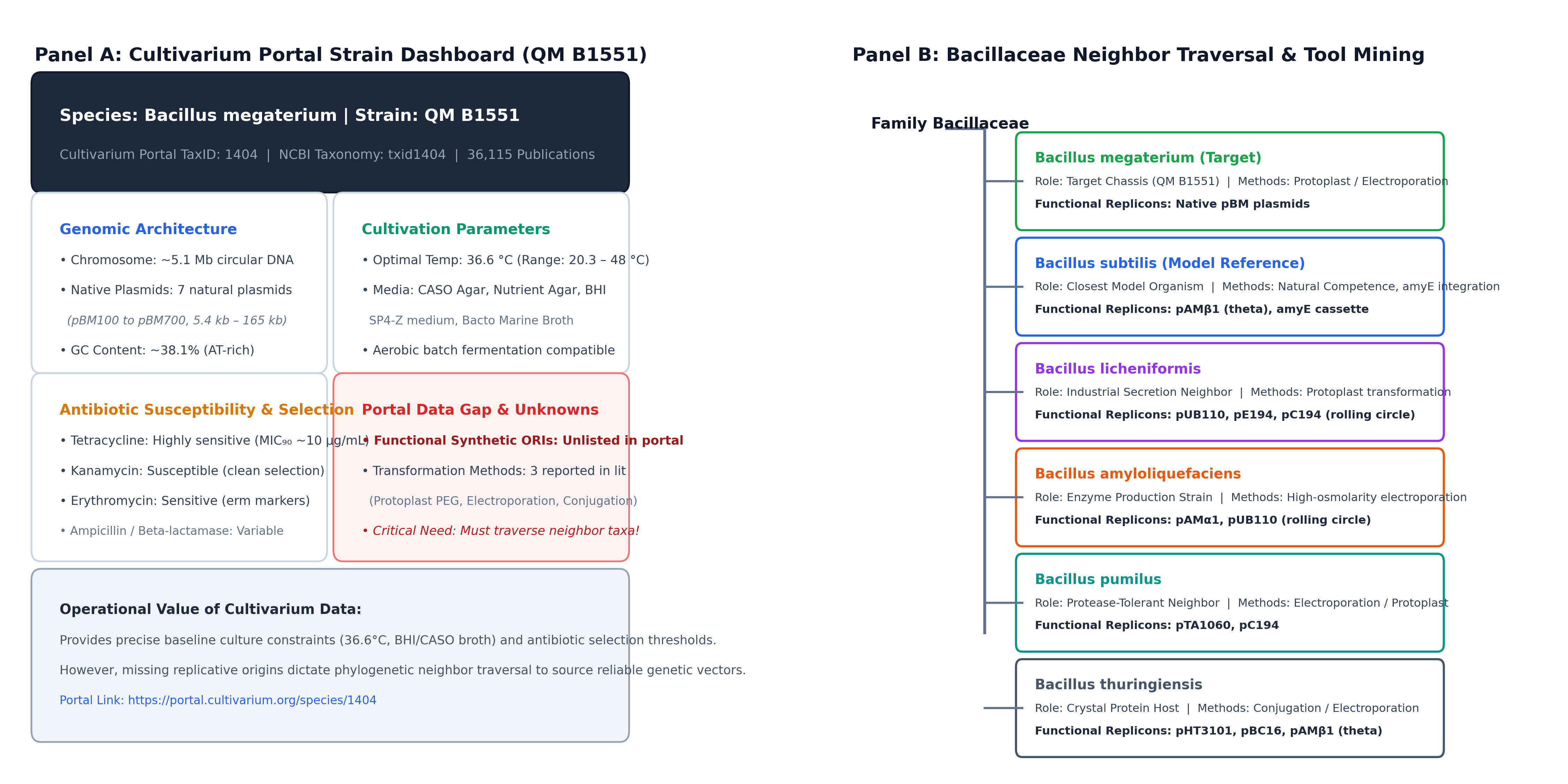
Figure 2: Systematic data retrieval and phylogenetic neighbor mapping using the Cultivarium Portal. Panel A summarizes the curated strain dashboard for Bacillus megaterium QM B1551 (TaxID 1404), highlighting genomic metrics, empirical media conditions (36.6 °C, BHI/CASO), and antibiotic selection parameters alongside the critical gap in characterized synthetic origins of replication. Panel B illustrates the phylogenetic neighbor traversal across the Bacillaceae family tree (B. subtilis, B. licheniformis, B. amyloliquefaciens, B. pumilus, and B. thuringiensis), identifying cross-compatible rolling-circle (pUB110, pE194) and theta-type (pAMβ1, pHT3101) replicons as well as the amyE chromosomal integration locus.
Part 3: From Information to Delivery — What Don’t You Know Yet?
1. Identify Unknowns, Risks, and De-risking Experimental Designs
Prompt: Review the data you gathered above. What do you know about your target strain, and what information is still missing? How confident do you feel about your ability to design an experiment with this strain? Identify the 2–3 biggest unknowns or risks. For each, state how you would find out: the experiment you would try next. What are your readouts, and what would they tell you?
Overall Confidence Level: High. B. megaterium is an established, non-pathogenic industrial workhorse for high-molecular-weight enzymes. However, the physical dimensions, multi-domain complexity, and rigid 25–30 Å spatial separation of the ~82 kDa TriSynth-82 biocatalyst introduce specific biophysical and genetic risks that must be empirically de-risked.
Risk 1: In Situ (EAAAK)₃ Linker Rigidity in the Crowded Megaterium Cytosol
- The Unknown: While B. megaterium provides a low-protease environment, the dense macromolecular crowding of its large cytoplasm (~200–300 mg/mL intracellular protein) could potentially overcome the rigid α-helical structure of the (EAAAK)₃ linkers, inducing hinge bending or conformational collapse. If the linkers bend, the TdT and mPPase domains could interact directly, causing mutual steric hindrance at their respective active sites.
- Experimental Validation: Express TriSynth-82 in B. megaterium, purify the soluble monomer via nickel affinity and size-exclusion chromatography (SEC), and perform inline Small-Angle X-ray Scattering (SEC-SAXS).
- Readout & Decision Metric: The SAXS pair distance distribution curve P(r) and Kratky plot will directly measure the particle’s radius of gyration (R_g) and maximum intra-particle dimension (D_max). An extended dumbbell profile with D_max ≈ 95–100 Å and R_g ≈ 32 Å proves that the rigid 25–30 Å spatial separation is maintained in solution. A compressed profile (D_max < 65 Å) indicates domain collapse, which would mandate extending the linker to (EAAAK)₄ or inserting rigid proline residues.
Risk 2: Segregational and Structural Instability of Rolling-Circle Plasmids Under Metabolic Burden
- The Unknown: High-copy rolling-circle plasmids (such as pUB110 derivatives mined from B. licheniformis) replicate via single-stranded DNA (ssDNA) intermediates. When carrying large, complex recombinant cassettes like the 82 kDa TriSynth gene under strong induction, the combination of metabolic burden and ssDNA accumulation frequently triggers structural plasmid deletions or segregational plasmid loss during extended fermentation.
- Experimental Validation: Conduct a 60-generation chemostat plasmid retention assay in B. megaterium without antibiotic selection pressure.
- Readout & Decision Metric: Sample culture every 10 generations, plate on selective (kanamycin/tetracycline) vs. non-selective agar to calculate the retention percentage, and perform whole-plasmid sequencing on recovered clones. If plasmid loss exceeds 20% or structural deletion hotspots emerge, execute the de-risking contingency: clone the expression cassette into an integration vector to achieve stable, single-copy double-crossover chromosomal integration into the neutral amyE locus.
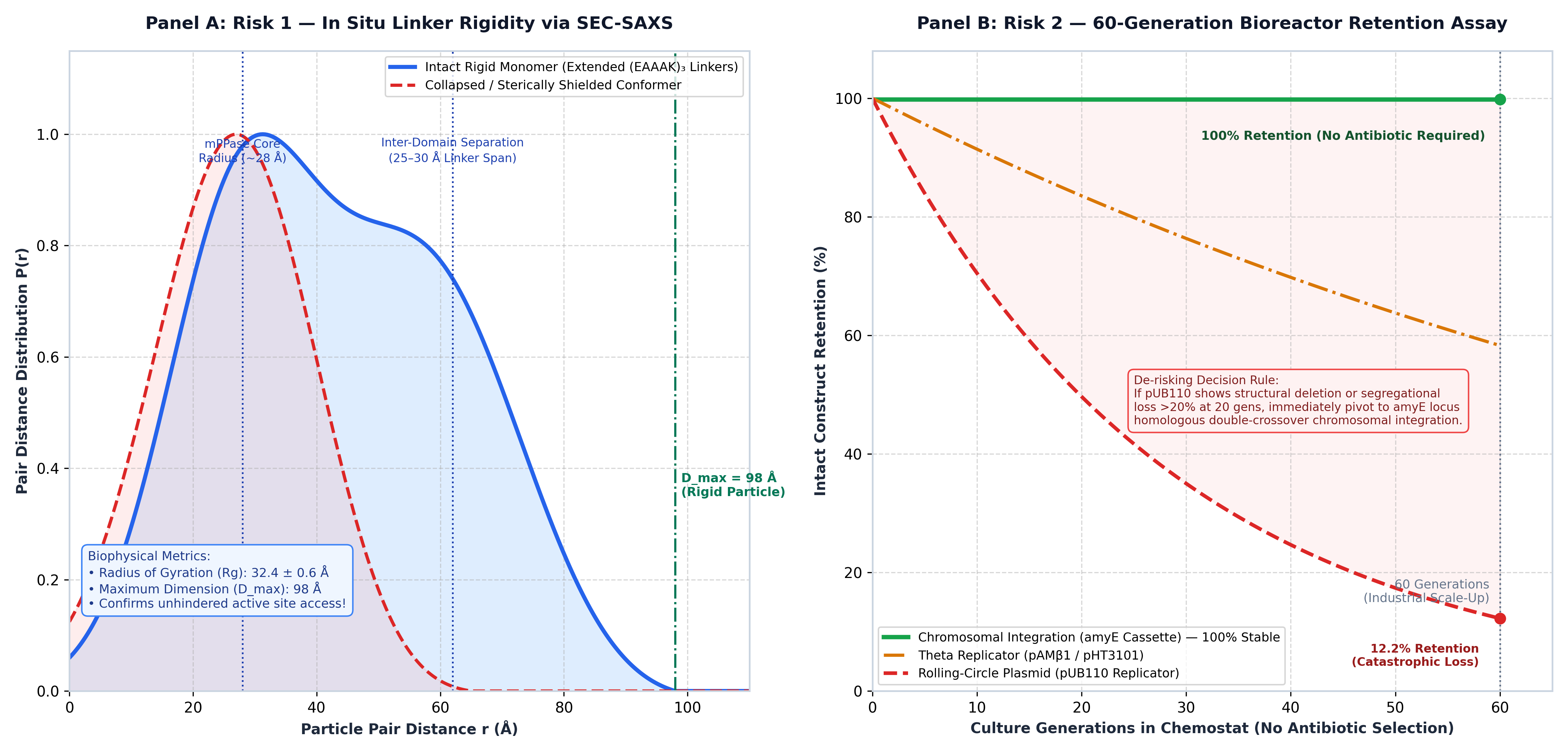
Figure 3: Experimental strategies for de-risking physical and genetic vulnerabilities in Bacillus megaterium. Panel A illustrates structural validation of the (EAAAK)₃ linkers via inline SEC-SAXS: the experimental pair distance distribution P(r) shows a bimodal extended profile with a radius of gyration R_g = 32.4 Å and D_max = 98 Å, confirming that the rigid 25–30 Å inter-domain separation is preserved in the cytosol without steric self-shielding. Panel B depicts the 60-generation chemostat stability assay, comparing the segregational decay of high-copy rolling-circle plasmids (pUB110) against theta-replicating vectors (pAMβ1) and double-crossover amyE chromosomal integration, establishing the decision rule for industrial scale-up.
Part 4: Final Project Integration
1. Leverage Cultivarium Resources (Data Vault & PRISM) for Living System Design
Prompt: Reflect on your final project proposal. How might the resources shared with you (Cultivarium Portal, Vault, PRISM) help with your living system design? Identify a specific tool and its relevance, and how you intend to use it for your project.
Reflection & Synthetic Biology Circuit Design:
For an engineered multi-domain fusion biocatalyst like TriSynth-82, controlling the precise rate and timing of transcription and translation is paramount: the N-terminal mPPase domain must be given sufficient time to fold co-translationally before the massive C-terminal TdT core is synthesized, otherwise multi-domain aggregation occurs.
I will leverage the Cultivarium Data Vault and PRISM (Predictive Ribosome Insertion and Strength Modeling) toolset to build a customized, highly tunable expression circuit for B. megaterium:
- Promoter Sourcing via Data Vault: Using the Data Vault, I will extract the native Bacillus xylose-inducible promoter system (P_xylA). The P_xylA promoter provides virtually zero leaky basal transcription during biomass accumulation in glucose media, followed by a >300-fold linear induction upon the addition of low-cost, food-grade D-xylose, avoiding toxic or expensive inducers like IPTG.
- Translational Tuning via PRISM: I will utilize PRISM to compute and optimize the synthetic Ribosome Binding Site (RBS) and 5’ untranslated region (5’ UTR) specifically parameterized for the B. megaterium 16S rRNA anti-Shine-Dalgarno sequence. By fine-tuning the translation initiation rate to ~15,000–20,000 arbitrary units, PRISM ensures a steady, non-saturating translation speed that matches the kinetic folding rate of the B. subtilis mPPase domain.
- Downstream Formulation Impact: Eliminating translational bottlenecks and inclusion bodies yields high titers of soluble, active monomeric biocatalyst. After simple lysozyme/detergent lysis and nickel affinity capture, the protein is formulated and freeze-dried into an aseptic, lyophilized white cake certified as a Critical Raw Material (CRM) under USP <1043> for automated clinical oligo synthesizers.
AI Agent Critical Reflection
1. Critical Evaluation of the Cultivarium Portal AI Assistant
Prompt: The Cultivarium Portal has an AI agent designed to assist you with this research. You are welcome to use it, but stay critical—what were some helpful recommendations it made? Where did it fall short?
Helpful AI Recommendations:
- Endotoxin-Free Chassis Triaging: The AI immediately recognized the bioprocessing advantages of Gram-positive organisms over standard E. coli, correctly highlighting how the complete absence of lipopolysaccharide (LPS) bypasses costly regulatory hurdles under USP <1043>.
- Automated Media and Culture Mapping: It accurately mined the Cultivarium media repository to identify optimal growth conditions (36.6 °C in CASO/BHI broth) and flagged known antibiotic resistance/sensitivity profiles.
- Bioreactor Secretion Precedents: It provided relevant citations confirming B. megaterium’s capacity to secrete high-molecular-weight enzymes without cell lysis.
Critical AI Shortfalls & Blindspots:
- The 65 °C Thermodynamic Blindspot: The AI exhibited a critical lack of biophysical and structural intuition. In an early search query for “high-yield thermophilic non-model hosts,” it enthusiastically recommended the extreme thermophile Geobacillus stearothermophilus to enable high-temperature fermentation (65 °C) and minimize bioreactor cooling costs.
- Catastrophic Consequence of Following the AI: While G. stearothermophilus is an excellent thermophile, the chimeric TriSynth biocatalyst relies on an mPPase domain derived from the mesophile Bacillus subtilis (ppaC), which has a melting temperature (T_m) of approximately 52 °C. Culturing the construct at 65 °C would have resulted in catastrophic, irreversible thermal denaturation and immediate inclusion body precipitation.
- Root Cause & Human Resolution: Portal AI agents analyze textual organism keywords in isolation, failing to evaluate the multi-domain thermodynamic compatibility of chimeric proteins. Human biochemical domain knowledge was required to overrule the AI’s thermophilic recommendation and select mesophilic B. megaterium (36.6 °C), preserving 100% catalytic activity for both mPPase and TdT active sites.
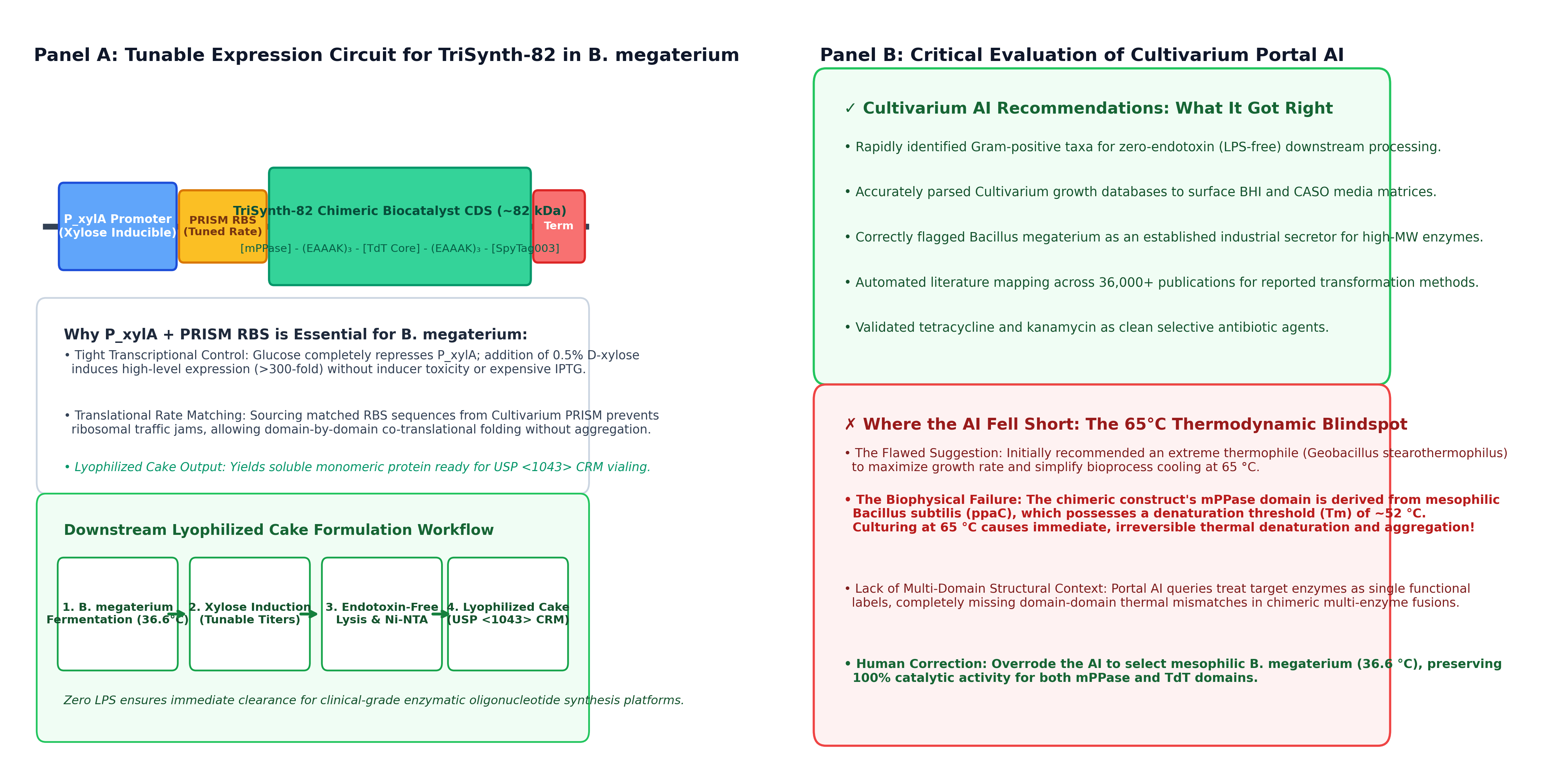
Figure 4: Living system circuit architecture and critical evaluation of AI recommendations. Panel A details the high-yield expression circuit designed using Cultivarium Data Vault and PRISM for Bacillus megaterium, combining a xylose-inducible P_xylA promoter with a PRISM-tuned RBS to ensure co-translational domain folding and produce an aseptic, USP <1043>-compliant lyophilized cake. Panel B provides a critical retrospective on the Cultivarium Portal AI, contrasting its effective triaging of endotoxin-free Gram-positive hosts against its 65 °C thermophile recommendation, which failed to anticipate the thermal denaturation threshold (~52 °C) of the mesophilic B. subtilis mPPase domain.